
Full 25-point door and opener safety check with every visit - springs, cables, rollers, tracks, and your LiftMaster or Chamberlain opener included
You get a price before we start. It does not change when the truck arrives.
 Before
 After
After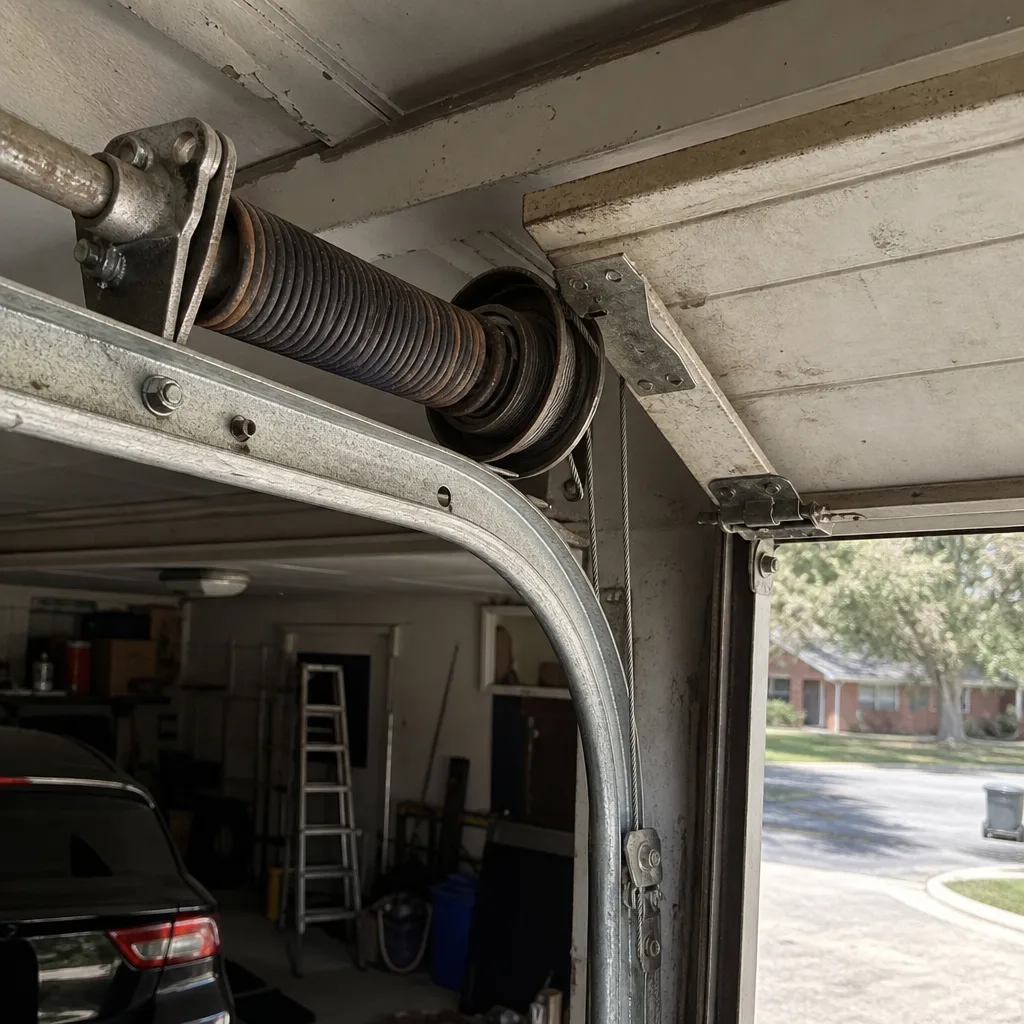 Before
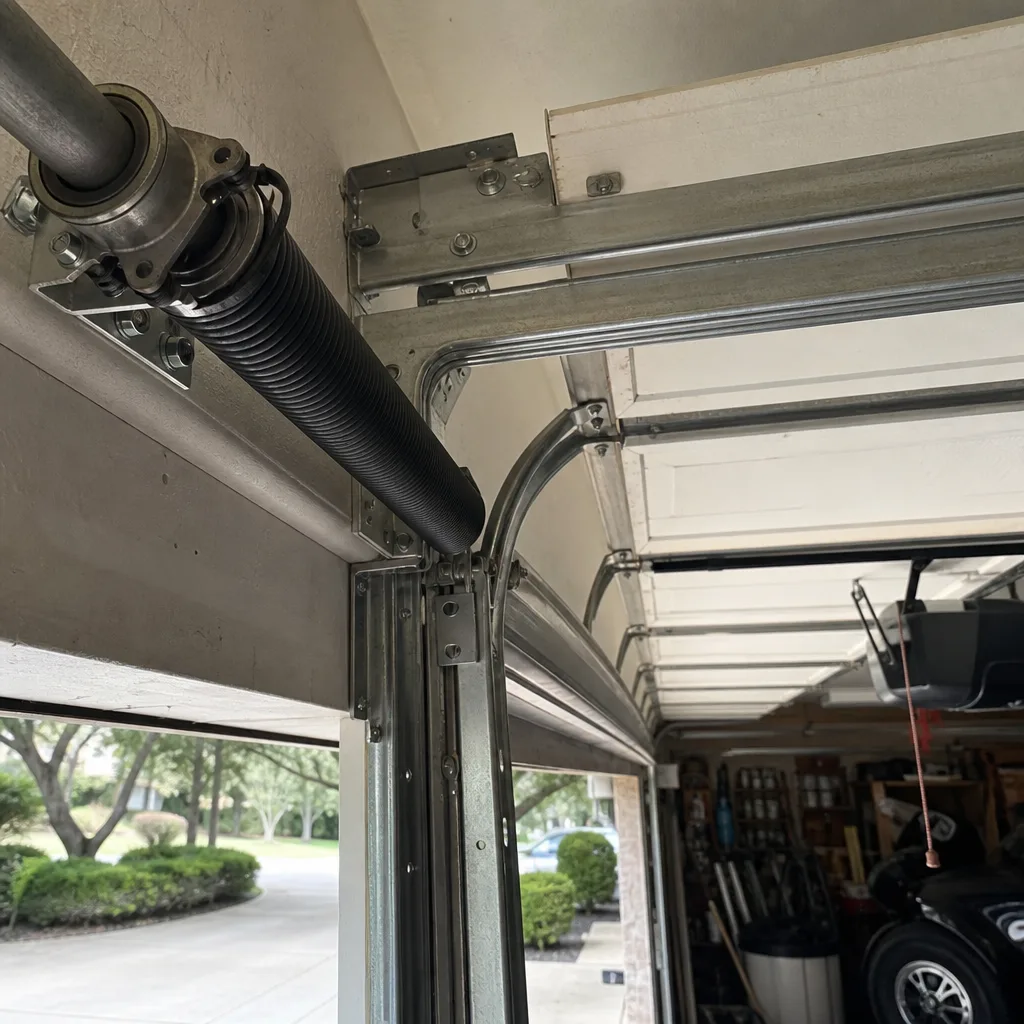 After
After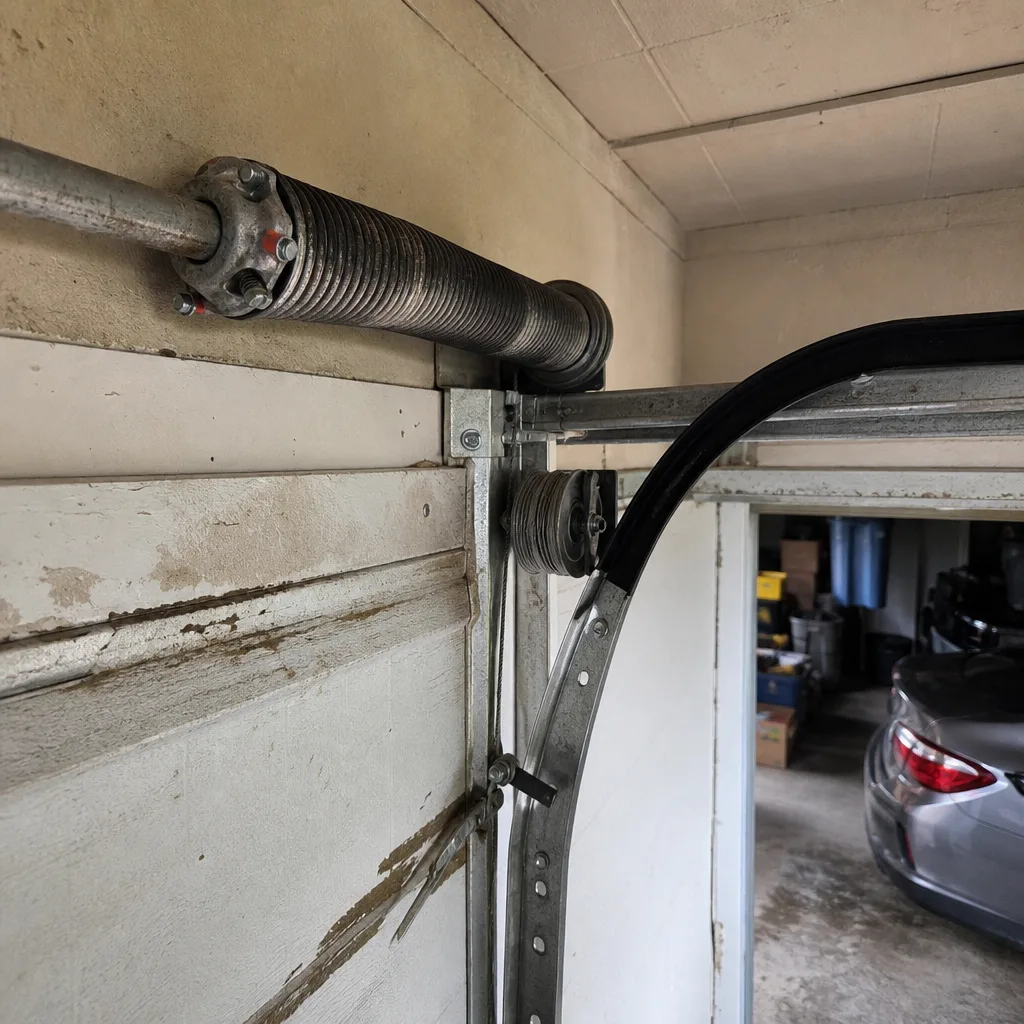 Before
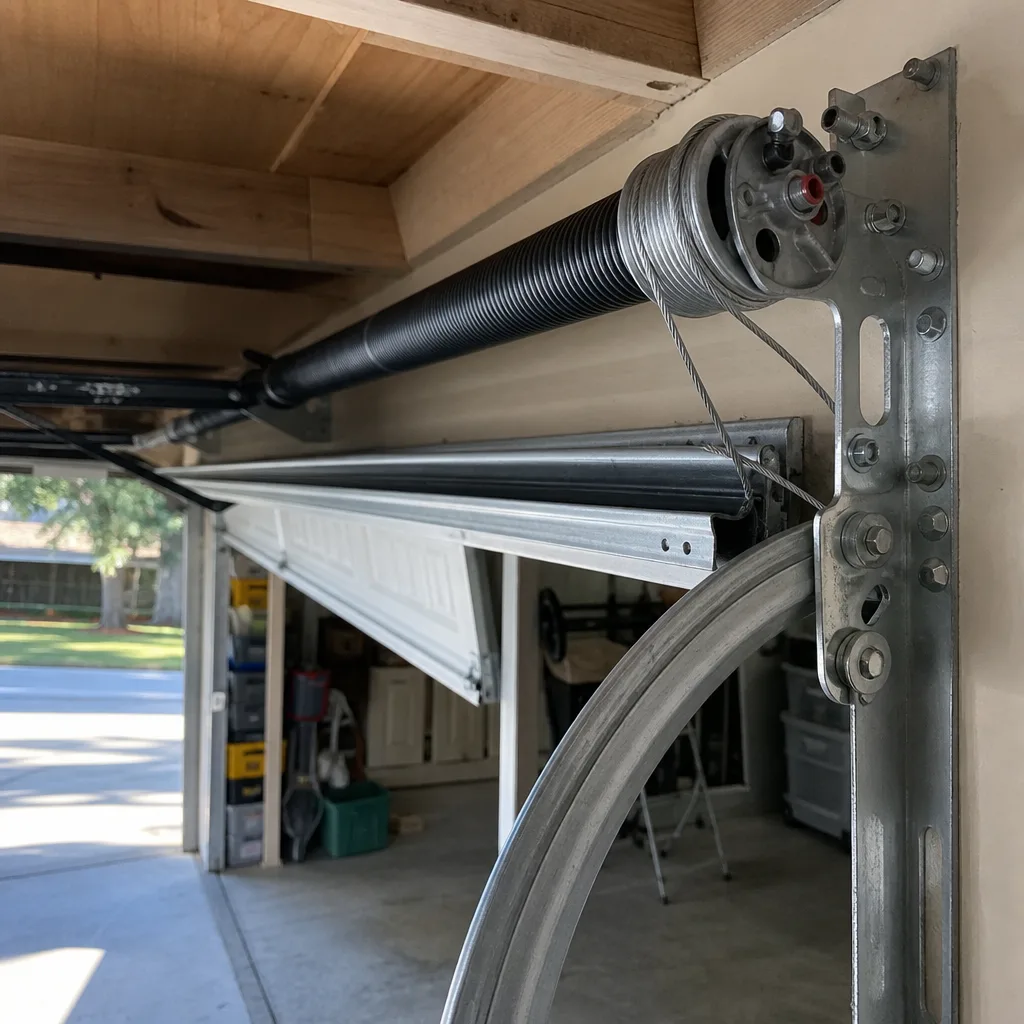 After
AfterClopay Torsion Spring Replacement: The Hill Country Village Owner’s Guide
A Clopay torsion spring replacement in Hill Country Village typically runs $180-$340 installed, and we stock the common Clopay wire sizes and inside diameters on the truck, so most swaps happen the same day you call. You’ll usually know it failed because your door either won’t lift at all, or it jumps about six inches and slams back down. That’s a snapped spring, and it’s not a door you should keep fighting, because the opener is now doing work it was never built to do.

Here’s the part most people don’t realize until it happens to them: the spring didn’t “go bad” overnight. It broke because it hit the end of its rated cycle life. Clopay prints cycle ratings on their spec sheets for a reason. A standard 10,000-cycle spring on a door that opens four times a day gives you roughly seven years. Out here in Hill Country Village, where garages get hot enough to bake the grease right out of the coils, we see springs fail a year or two early when they weren’t lubricated. We’ll get into that below.
Which Clopay Models This Applies To
This guide covers torsion spring systems on Clopay residential doors: the Classic, Gallery, Grand Harbor, Reserve, and the newer Canyon Ridge and Bridgeport lines. The key thing to understand is that Clopay doesn’t use one universal spring. Spring wire size, inside diameter, length, and wind direction all change based on your door’s weight, height, and whether it has one spring or two.
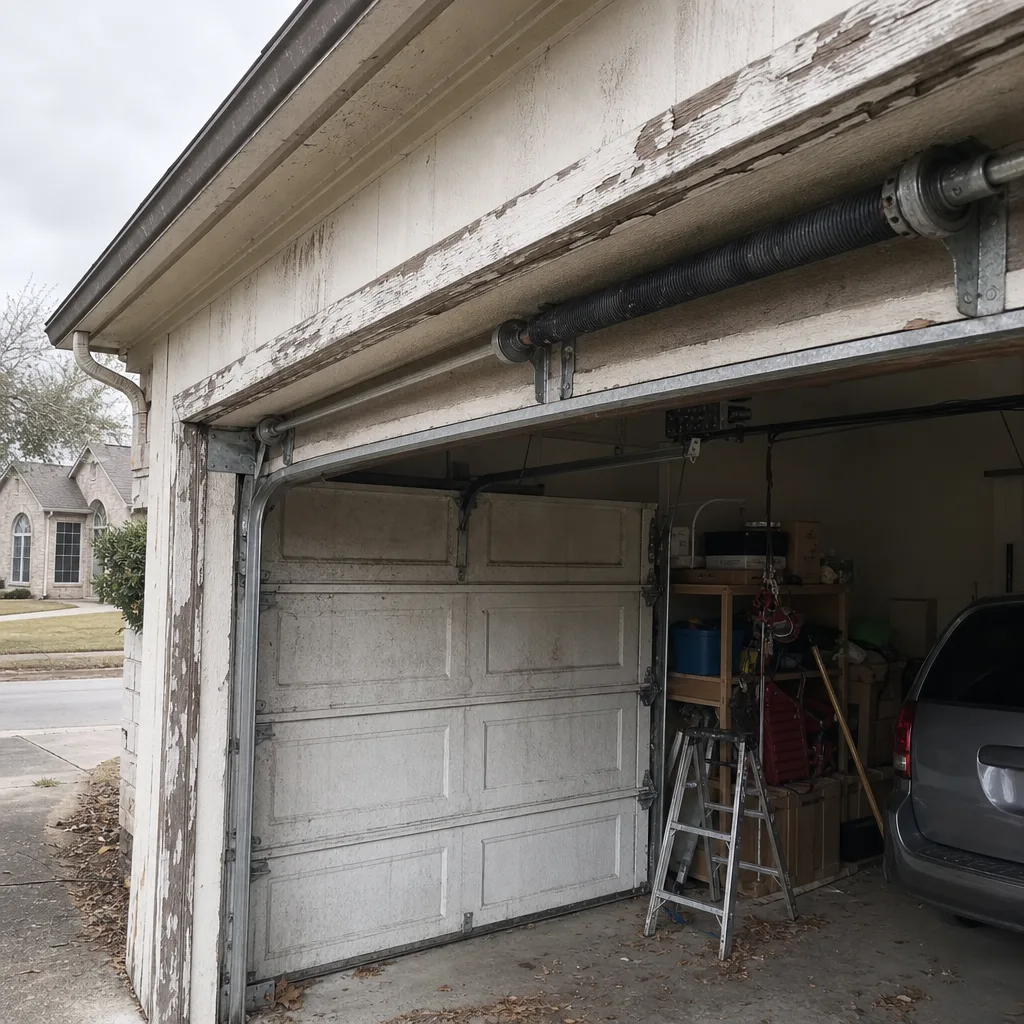
If you look at the spring itself, you’ll usually find a painted color code on the end cone: red, gold, blue, green, and so on. That code tells us the wire gauge and inside diameter, which is how we match it on the truck. But color isn’t enough. Two doors with black springs can need different lengths depending on door weight and drum size. So when you call (830) 215-8185, walk out to the garage and tell us the color on the cone and the door’s height and width, and we can usually tell you over the phone what you’re looking at.
One compatibility gotcha we run into weekly: owners replace a door and keep the old operator rail, then the new Clopay door has different spring tension, and suddenly the opener sounds like it’s chewing gravel. That’s not an opener failure. That’s a spring rate mismatch. On the OEM-versus-aftermarket question: Clopay-branded springs are fine, but most of the residential springs in this industry are made by a handful of spring manufacturers whose coils end up on doors from Clopay, Amarr, and Wayne Dalton alike. We stock quality aftermarket springs that match Clopay specs exactly, and we won’t charge you a Clopay label premium without telling you the difference. We’re an independent shop, not affiliated with Clopay, which means our loyalty is to your door, not a brand rep.
Signs Your Clopay Torsion Spring Is Failing
Springs rarely fail without warning. Here’s what we actually see before the big bang:
- The door feels heavier than it did last year. Springs lose tension as they fatigue. If you disengage the opener and the door no longer stays put at the halfway point when you lift it manually, the spring is tired. That’s the earliest reliable sign.
- A visible gap in the coil. Walk up to the spring and look at it. A healthy torsion spring is one continuous coil. If you see a separation, like a slinky pulled apart, it’s already snapped and just hasn’t unwound fully yet. Don’t stand under it while looking.
- The door opens six inches and stops, or the opener grinds. Once a spring breaks, the opener is trying to dead-lift the whole panel. That gear-and-sprocket noise is the opener stripping itself. Cut the power until the spring is replaced.
- Loud bang from the garage in the middle of the night. That’s the snap. It sounds like somebody dropped a toolbox from a ladder. Hill Country Village nights are quiet, so you’ll hear it plain as day.
- The safety cables look slack or the torsion tube looks bowed. Springs that are binding or wound unevenly put sideways stress on the tube and cables. If those cables aren’t doing their containment job when the spring lets go, the coil can whip. That’s the danger we’ll talk about next.
Replacement Cost & What’s Included
Here in Hill Country Village, a Clopay torsion spring replacement runs $180-$340 installed, and that’s parts, labor, and balancing, with the price agreed before we touch the door. The range exists because a single lightweight spring on a single-car door costs less material and less labor than a pair of high-cycle springs on a 16-foot double door. If you want springs rated for 20,000 cycles instead of 10,000, that’s the upper end of the range, and it’s usually worth it out here given the heat we put our doors through.
| Item | Hill Country Village Installed Range |
|---|---|
| Single torsion spring, standard cycle | $180-$260 |
| Pair of torsion springs, standard cycle | $240-$340 |
| High-cycle spring upgrade (20,000+ cycles) | Upper end of range, quoted on site |
| Cable replacement added to spring job | $130-$250 |
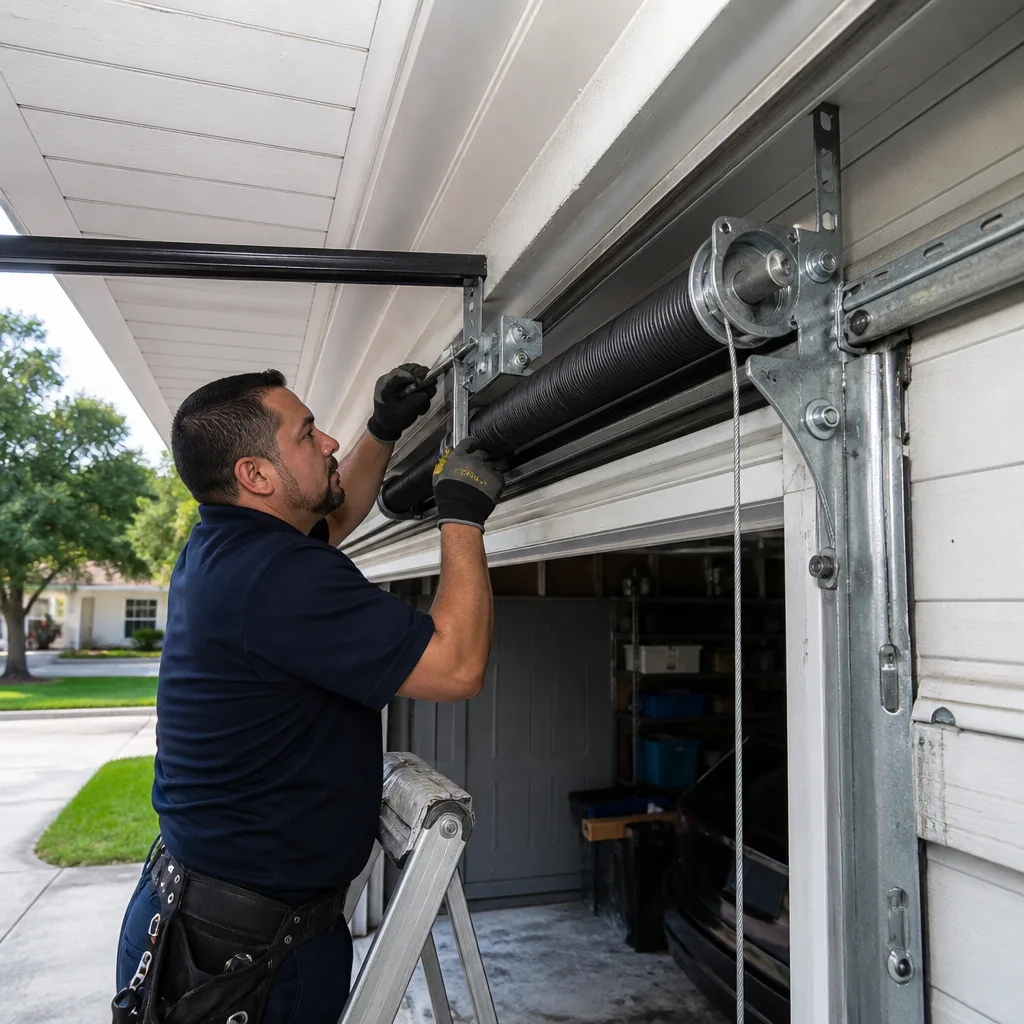
Every spring job includes winding the new spring to the door’s exact weight, checking both drums and cables, lubricating the end bearings, and running the door through a full cycle test. The price we quote on the phone is the price on the invoice. If we find something else wrong while we’re in there, we show you first and you approve it before we turn a wrench on it. No surprises at the door. Never have, never will, since 2004.
DIY or Call Us?
We’re going to be straight with you: a torsion spring is the one garage door part we tell people not to touch. There’s enough stored energy in a wound spring to break bones or worse if it lets go while you’re winding it. The winding bars, the set screws, the sequence of quarter-turns, the balance test afterwards: all of it has to be right, or the door becomes a 200-pound hazard on a hair trigger. Otto Reinhardt learned this trade at Los Angeles Trade-Technical College and has been fixing Hill Country Village doors for years now, and he still treats every spring like it’s trying to hurt him. Respect it the same way.
What you can safely do: note the spring color code and door size, open and close the door once to confirm the symptom, and call (830) 215-8185 with that information. That call gets you a real quote and a real person, any hour, not a voicemail tree. We’ll handle the rest.
FAQs
A standard 10,000-cycle spring lasts roughly seven years on a door that opens four times daily, but Texas garage heat shortens that by a year or two when springs go unlubricated. High-cycle springs rated for 20,000 cycles effectively double the working life. Call (830) 215-8185 and we can check the cycle count on your current springs and tell you what’s left.
No. A snapped spring cannot be welded, spliced, or rewound safely. Springs are replaced with new ones matched to the door’s weight and dimensions. Once metal fatigue has gone far enough to break a coil, the whole spring is spent.
Most single-spring Clopay replacements take 30 to 45 minutes. A pair on a heavier double door runs about an hour, including balancing and a full travel test. We carry the common sizes on the truck, so it usually happens the same day you call.
Yes. We carry the wire sizes, inside diameters, and lengths that match most Clopay residential doors, and we stock parts for LiftMaster, Chamberlain, and Genie openers as well. If your spring is an uncommon spec, we’ll have it in hand the next morning and finish the job then.
Written by Otto Reinhardt, Owner, Otto’s Garage Door at Otto’s Garage Door, serving Hill Country Village and nearby areas.