

Last updated September 11, 2026
Full 25-point door and opener safety check with every visit - springs, cables, rollers, tracks, and your LiftMaster or Chamberlain opener included
You get a price before we start. It does not change when the truck arrives.
 Before
 After
After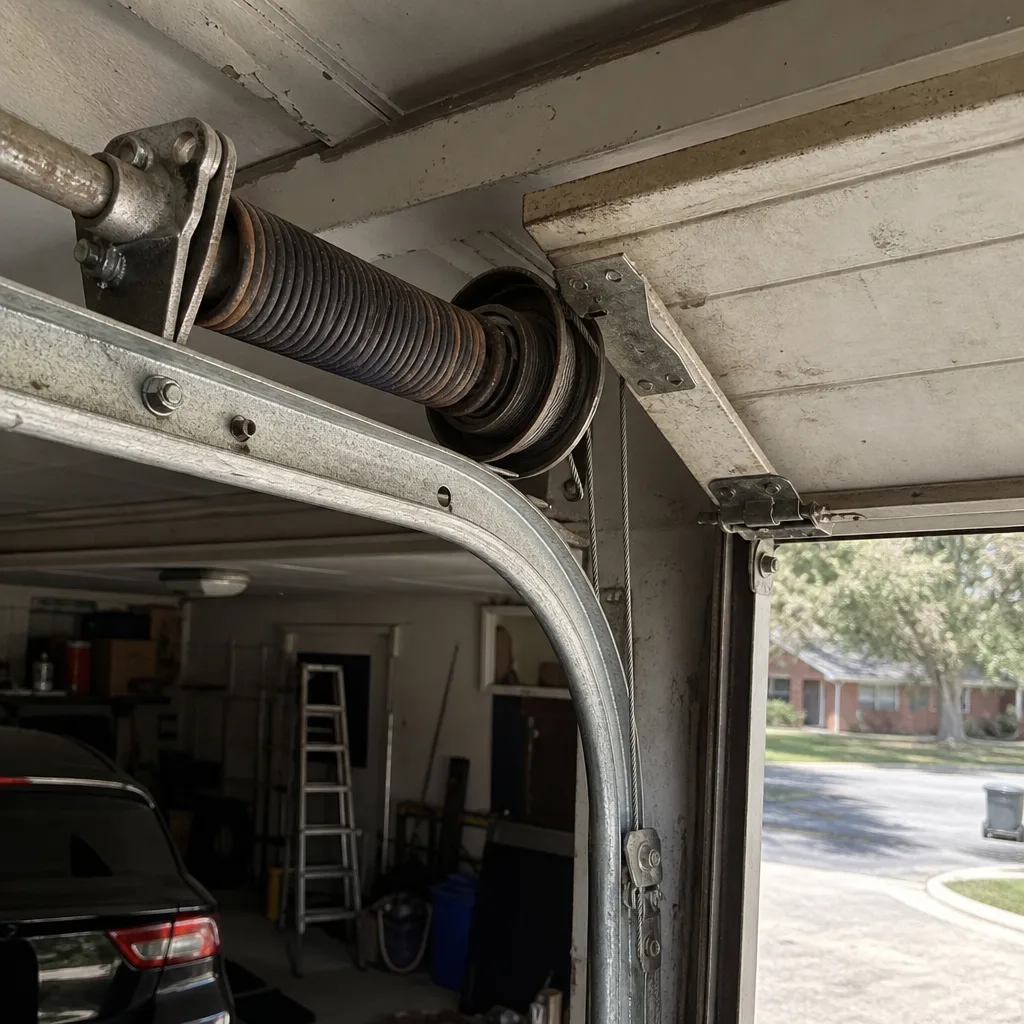 Before
 After
After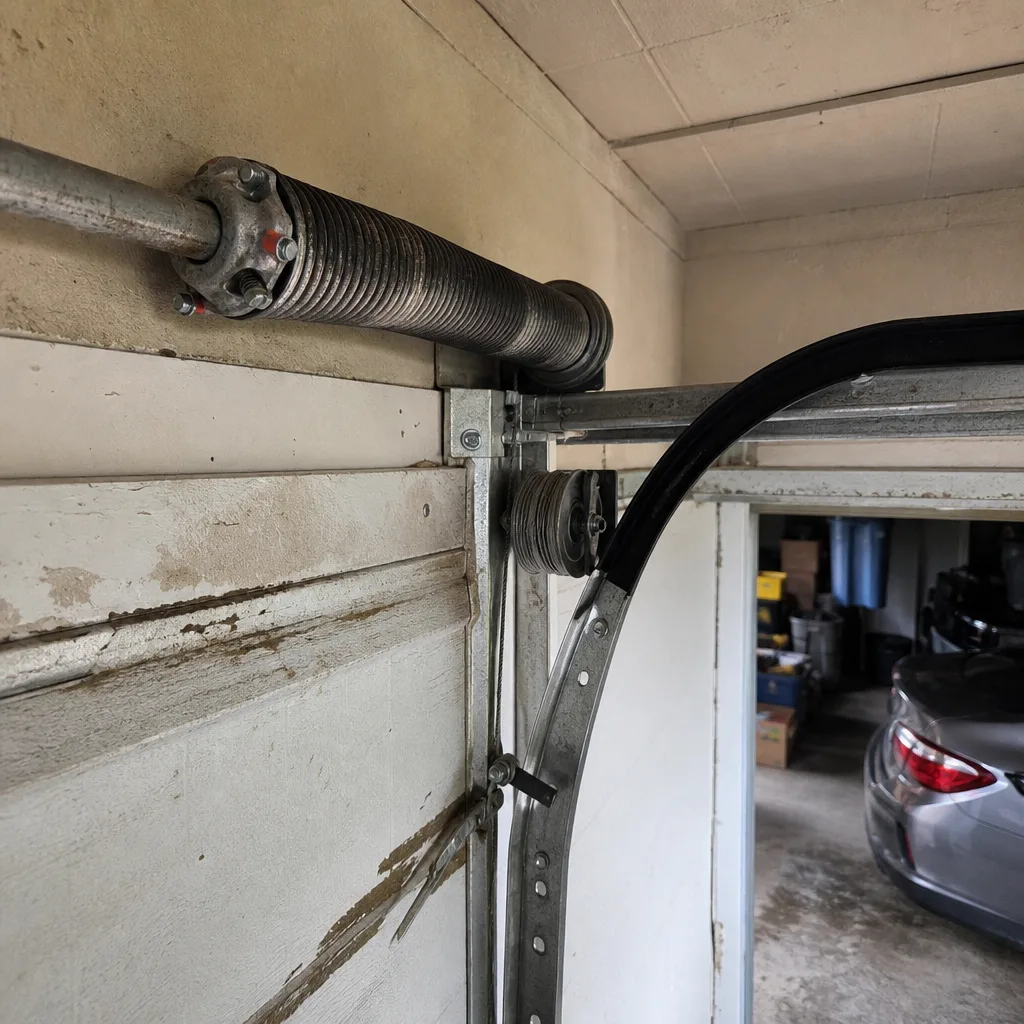 Before
 After
AfterGarage Door Warning Signs: A Hill Country Village Homeowner’s Reference Guide
Here’s a number that still surprises most homeowners when we share it: nearly 70% of the emergency weekend calls we take in Hill Country Village come from doors that gave a warning first. Not a dramatic warning. Not a crash or a split cable. Something small. A door that took a beat longer to lift. A creak that came and went. A vibration in the handle that felt new. The homeowner noticed it, filed it under “I’ll keep an eye on that,” and forgot about it until the spring let go on a Sunday evening with the car trapped inside. We’ve been fixing garage doors in Hill Country Village since 2004, and the pattern holds. Doors rarely fail without warning. The warning just doesn’t announce itself. This guide is meant to change that. We’ll walk through the signs that matter, the ones that show up three to six months before a failure, and what to do when you spot them.
Quick Answer
Garage door warning signs in Hill Country Village fall into two buckets: the obvious ones most people recognize (grinding, shaking, a door that stops halfway) and the subtle ones that appear months earlier (a two-second slowdown, a new vibration pattern at one point in the track, rust in a specific location, or a sensor light blinking in a new rhythm). The subtle signs are the ones that save you real money, because a $180 service call now beats a $900 emergency repair on a Sunday night. Learn to read them and you’ll never be the person who found out the hard way.
Table of Contents
- The Slow Creep: When Your Door Takes Two Extra Seconds
- Vibration Patterns: Loose Bolt vs. Failing Bearing
- Rust Mapping: Where Surface Rust Is Fine and Where It Isn’t
- Sensor Tells: What That Blinking Light Is Actually Saying
- The Noise Dictionary: Squeaks, Grinds, and Thumps
- What to Do the Moment You Notice a Warning Sign
- Springs and Cables: The High-Stakes Components
- Common Mistakes to Avoid
- When to Call a Professional
- Frequently Asked Questions
- The Bottom Line
The Slow Creep: When Your Door Takes Two Extra Seconds
This is the warning sign we wish every homeowner in Hill Country Village knew about, because it’s the one that most often turns a simple repair into an emergency. A garage door that takes two seconds longer to open than it did six months ago is not “getting old.” It’s telling you something specific: one of the two torsion springs is losing tension. The spring isn’t broken yet. It’s tired. And a tired spring is a spring on a clock.
We count spring cycles the way you count tire miles. A standard torsion spring is rated for roughly 10,000 cycles, which works out to 7 to 12 years of normal use for most Hill Country Village homes. When a spring loses a little tension, the opener has to work harder to lift the same 200-pound door. That’s the two-second delay. That’s the opener sounding like it’s straining. And it’s not the opener’s fault. If the opener is straining, the problem is almost never the opener. It’s the spring asking for retirement.
Here’s a simple way to measure it without any tools. Open your garage door and mentally count “one Mississippi, two Mississippi” from the moment you press the button. Do it three times over three days. If the count is creeping up, or if the door hesitates before it starts moving, the spring is losing tension. If the door opens normally but closes noticeably slower, that’s the same story in reverse. In the Hill Country Village climate, where temperature swings between winter cold snaps and August heat add extra stress to spring steel, this creep can happen faster than it would up north. The humidity isn’t the issue. The temperature cycling is.
What you’re looking for is a baseline. If you’ve never timed your door, today is a good day to start. The number matters less than the trend. A door that used to open in four seconds and now takes six is a door that needs attention within the next two to three months. Not next year.
Vibration Patterns: Loose Bolt vs. Failing Bearing
Not all vibrations are equal. Learning to tell them apart is the difference between a five-minute fix you can do yourself and a roller bearing that’s about to come apart while the door is moving. Here’s the short version: a vibration that tracks with the door’s movement and changes pitch as the door passes a certain point is usually a loose bolt. A vibration that’s constant, grinding, and doesn’t care where the door is in its travel is usually a roller bearing that’s dying.
Let’s make that useful. When a bolt backs out on a hinge, a bracket, or a track mount, the door will rattle at that specific point in its travel. You’ll hear it at the same spot every time. The panel itself will look slightly loose if you press on it. If you’re comfortable with a socket wrench, snug the bolt down and the vibration goes away immediately. That’s the five-minute fix, and it’s fine to do yourself as long as you’re not touching the cables or springs.
A failing roller bearing sounds different. It’s a rumble or a grind that starts soft and gets louder over weeks. It doesn’t care which part of the track the door is on. The roller wheel may look fine from the outside, but the bearing inside is dry or cracked, and it’s generating metal dust. If you see dark gray or black residue streaking down the inside of the vertical track, that’s bearing material. Stop using the door. A roller bearing that seizes while the door is in motion can jam the panel in the track, bend a hinge, or pull a cable off its drum. That’s a service call, not a DIY afternoon.
We’ve seen doors in Hill Country Village where the homeowner kept running a grinding door for a month because “it still works.” By the time we got there, the roller had chewed through the track and the panel was kinked. What would have been a $60 roller replacement became a panel-and-track repair in the hundreds. When the vibration changes pitch, that’s your signal to stop and look.
Rust Mapping: Where Surface Rust Is Fine and Where It Isn’t
Rust is the Hill Country Village garage door’s quietest enemy. It doesn’t make noise. It doesn’t slow the door down. It just eats, and by the time you see it, the question is where it’s sitting. Surface rust on a panel face is, for the most part, cosmetic. Ugly, yes. Structurally dangerous, no. But rust in specific locations tells a different story, and those locations are what every homeowner should know how to read.
Here’s the map that matters:
- Bottom panel, along the bottom seal or weatherstrip: This is the number one rust zone on garage doors in Hill Country Village, especially after a wet spring. Water pools at the base of the door after every rain, and if the seal has gaps, it wicks up into the panel. Rust here is structural because it weakens the panel that carries the most movement stress. If the bottom edge feels soft or flakes when you press it, the panel is going.
- Hinge mounting points: Every hinge on your door is bolted to a panel through a steel bracket. When water runs down the panel face, it collects around these bolts. Rust at a hinge point means the metal around the bolt hole is thinning. A hinge that rips out of a rusted panel mid-cycle takes the panel with it.
- End stiles (the vertical edges of each panel): These are the load-bearing rails that the hinges and rollers attach to. If the end stiles show rust, especially near the bottom two panels, the connection between roller and panel is compromised. That’s the connection that keeps 200 pounds on track.
- Springs and cables (the two exceptions to the cosmetic rule): Rust on a torsion spring or a lift cable is never cosmetic. A rusted spring has micro-pitting that concentrates stress, which is exactly how springs snap. A rusted cable loses individual strands that slice the ones next to them. If you see rust on springs or cables, do not touch either one. Call someone who works on them for a living. The repair involves high tension, and a snapped cable under load can take fingers off.
The practical takeaway: run a finger along the bottom panel edge twice a year. If the rust is dusty and the metal underneath is solid, sand it, prime it, and touch up the paint. If your fingernail sinks in, start budgeting for a panel or a door.
Sensor Tells: What That Blinking Light Is Actually Saying
Modern openers are better than most homeowners realize about telling you what’s wrong. You just have to know how to listen. The photo-eye sensors at the bottom of your door each have a small LED, and the pattern that LED blinks in is the opener’s version of a check-engine light. The catch is that different brands use different patterns. Since we work on LiftMaster, Raynor, and Craftsman openers every week in Hill Country Village, here’s a practical translation for the ones you’re most likely to have.
On a LiftMaster, the most common sensor tells are these: a solid amber light on the sending eye and a solid green on the receiving eye means everything’s good. An amber light that blinks twice means a wiring short or a misaligned sensor. An amber light that blinks four times on newer models means the sensor eyes are misaligned or something is blocking the beam. On Craftsman models, which share some internal hardware with older Chamberlain designs, a receiving eye that blinks steadily usually means misalignment. A light that doesn’t come on at all means no power to the sensor, which is a wiring issue. Raynor openers tend to blink the main overhead unit’s LED instead: two blinks is obstruction, three is a logic board warning.
The important distinction for your safety and wallet: a blinking sensor light that goes steady when you physically align the two eyes and clear the path is a maintenance issue. You’ve fixed it. A light that keeps blinking after the eyes are aligned and the lens is clean is telling you about a wiring break or a failing logic board. Continuing to run the door by holding down the wall button overrides the safety reverse, which is exactly the function that stops the door from closing on a kid or a pet. Do not bypass the sensors because the blinking annoys you.
The Hill Country Village connection here is heat. Logic boards fail faster in uninsulated garages that hit 100-plus degrees through a Texas August, and we see a spike in sensor-related calls every summer. If your opener’s behavior changes when the garage gets hot, that’s not a coincidence. The board is cooking.
Two-step read: if the blink pattern changed and you can’t make it go back to solid by cleaning and realigning, write down how many times the light blinks, note the brand, and call someone who can tell you what that specific pattern means before you spend money on parts.
The Noise Dictionary: Squeaks, Grinds, and Thumps
Your garage door makes a noise every time it moves. The question is which noise. In two decades of working on garage doors in Hill Country Village, we’ve learned to sort sounds the way a mechanic sorts engine noises. Here’s the field guide.
Squeak, rhythmic, tied to the door’s position: This is almost always a hinge pin or a roller. If the squeak matches the door’s travel and repeats in the same spot every time, oil the hinge pins and roller stems with a garage-door-specific lubricant or white lithium grease. Do not use WD-40, which cleans but doesn’t lubricate, and do not oil the roller bearings themselves unless you plan to replace them soon. A rhythmic squeak is the most benign sound on this list and the one most likely to respond to a five-minute fix.
Grind, constant, doesn’t care about position: Refer back to the vibration section. A constant grind is a roller bearing, a worn drive gear in the opener, or a track that’s sized wrong for the door after a sloppy installation. Unlike a squeak, a grind gets worse with use and it doesn’t go away with lubrication. Stop using the door and get eyes on it.
Thump or bang, at the top of travel: A door that thumps as it reaches the open position is usually slamming into the stop bolt because the opener’s up-limit is set too high or the spring is over-tensioned. This is harder on every part of the system, from the panel joints to the opener’s gearbox. It’s adjustable, but the adjustment lives in the same neighborhood as the torsion springs, so when the thump is new and the travel limit isn’t something you’ve touched, call a pro.
Pop or snap, sudden, followed by the door not moving: This is the one sound you already know. A loud pop from above the door, often followed by the door dropping an inch or refusing to open, is a torsion spring snapping. If you hear this sound, do not run the opener. Do not try to lift the door manually. The remaining spring is still under full tension, and the door is now carrying its weight asymmetrically. Call someone who replaces springs for a living. In Hill Country Village, that’s usually a same-day fix for us because we carry springs on the truck, but the key is not to run the door in the meantime.
Scrape, metal-on-metal, getting louder: A scrape that runs the length of the track usually means a track has shifted and the door edge is riding it. Sometimes a roller is flattening. If you see bright metal shavings on the floor or in the track, a component is wearing fast. That’s another stop-and-call situation.
What to Do the Moment You Notice a Warning Sign
Here’s the sequence we walk homeowners through every week in Hill Country Village. It’s simple, it’s specific, and it keeps a small problem from becoming a big one.
- Write down what you noticed. Not in your head. On paper or in your phone. “Door takes two extra seconds to open. Grinding noise louder than last month. Sensor light blinks three times.” The more specific you are, the faster the diagnosis goes, and the less likely you are to forget the details when someone asks.
- If the noise or vibration is new and constant, stop using the door. This is the rule we repeat every time: a door that’s changing its behavior is not going to fix itself. Each cycle adds wear. If you have a second door or a keypad at the front of the house, use that. If the door is your only way to get a car in and out, minimize cycles until someone looks at it.
- Do not lube your way past the problem. Lubricant fixes squeaks. It does not fix springs, cables, bearings, or logic boards. If you oil a grinding roller, all you’ve done is make the bearing quieter while it fails. That’s worse, not better.
- Do not touch the springs or cables. Ever. This is not a “be careful” suggestion. The torsion system above your door is under hundreds of pounds of tension, and the most common garage-door injury in this country is a homeowner trying to adjust a spring with a pair of vise grips and a YouTube video. A door is 200 pounds riding on two springs. Respect it.
- Call and describe the exact symptom you wrote down. When you call us at (830) 215-8185, you’ll get a live person. Tell them the noise, the timing, the blinking light, the rust location. That description tells us which parts to load on the truck before we leave, which means the fix happens on the first visit more often than not.
- Ask for a price before the person shows up. A garage door repair quote given over the phone should not turn into a different number at the door. We quote the job when you call and we hold that number when we get there. If a company won’t give you a number before they’re standing in your driveway, that’s a red flag.
If you’re not sure whether what you’re seeing is a warning sign or nothing, the answer is to ask. A two-minute phone call costs you nothing, and it either gives you peace of mind or catches a $180 repair before it becomes a $900 Sunday-night emergency.
Springs and Cables: The High-Stakes Components
Everything else in this guide exists in the world of annoyances and gradual wear. Springs and cables live in a different category, because when they fail, they fail fast and the door becomes a hazard. We’re separating this section out so you walk away with a clear threshold: if the symptom points to a spring or a cable, you are no longer in DIY territory, and the cost of being wrong is an emergency room visit.
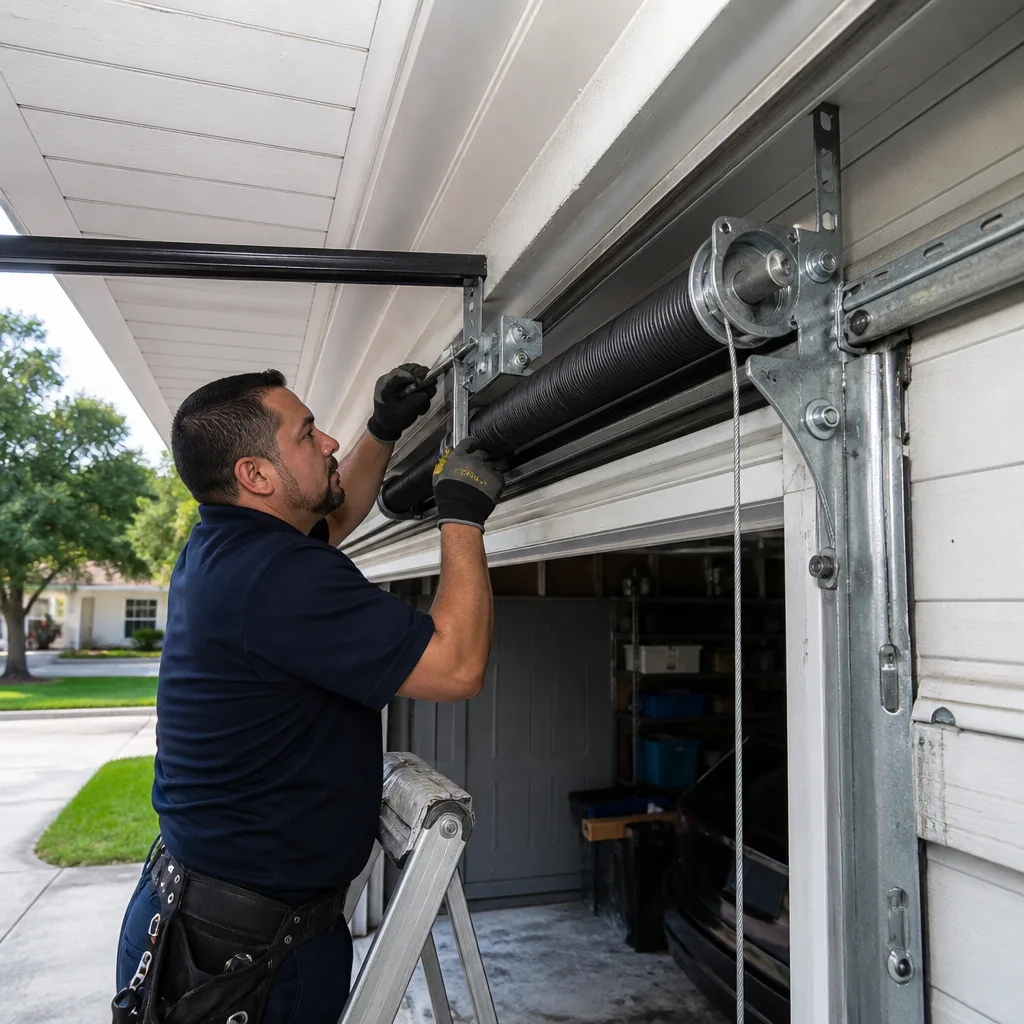
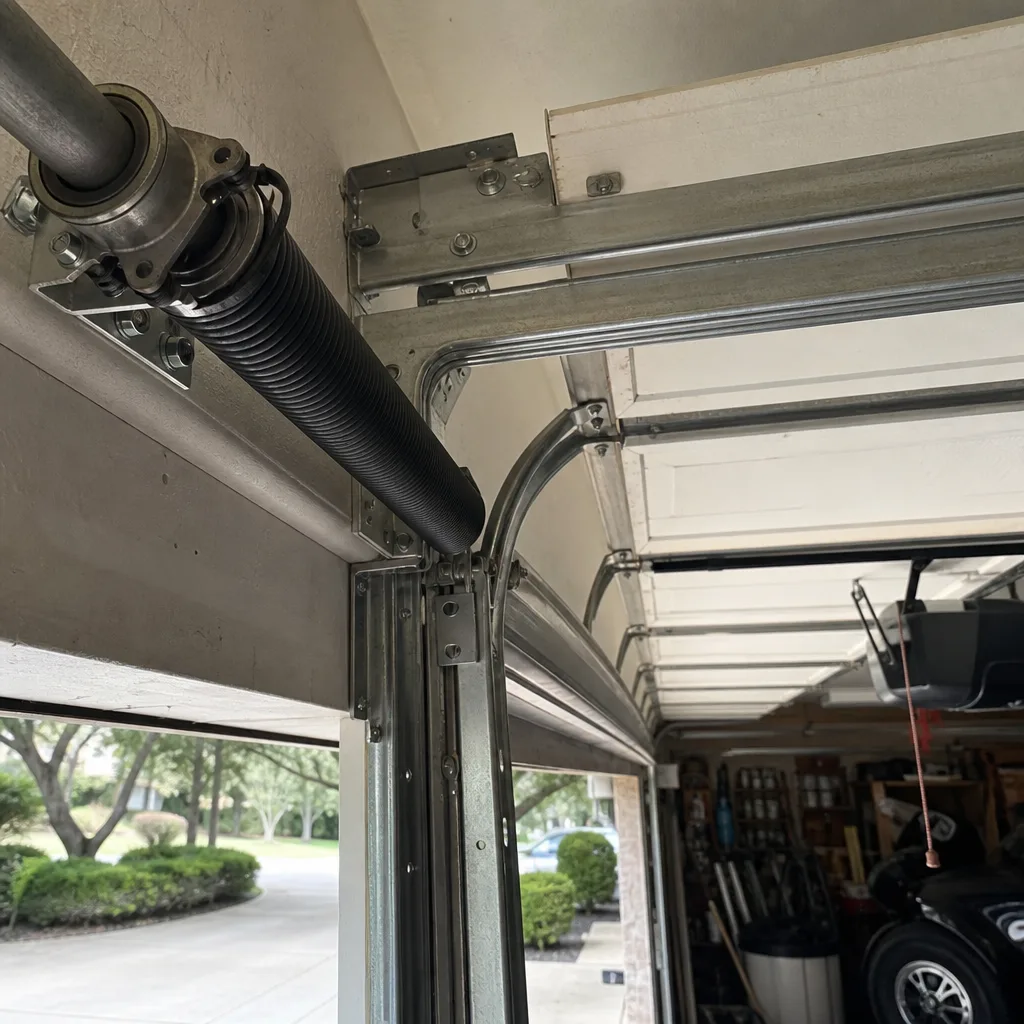
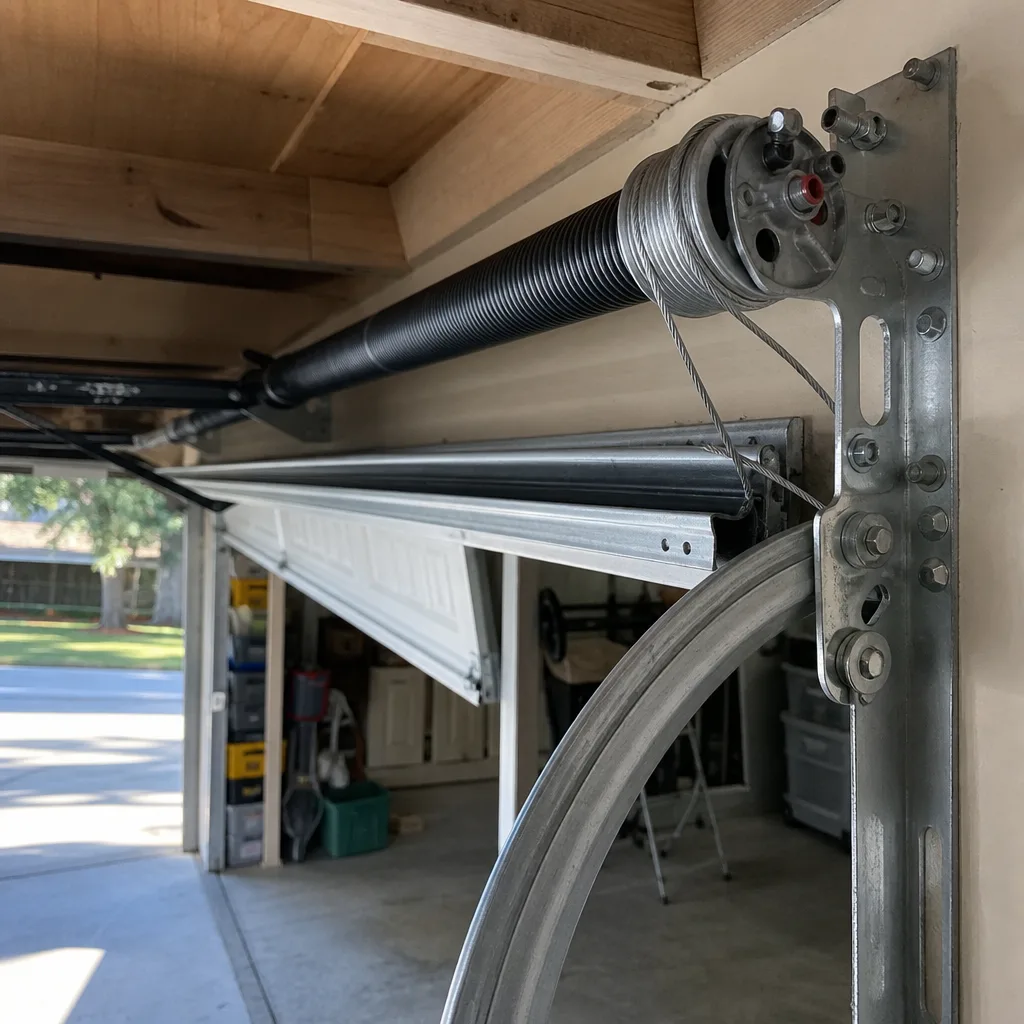
Most Hill Country Village garage doors built after the late 1990s have torsion springs: two coiled springs mounted on a rod above the door opening. Extension springs, the kind that stretch along the tracks on older doors, are less common now but we still see them on original doors in the older Hill Country Village homes. Both types store enormous energy. A torsion spring under load is wound to hold roughly the full weight of the door. When it snaps, that energy releases instantly. The spring doesn’t just break. It unloads, and anything in its path takes the hit.
The most common early warning is visual: a gap in the spring. On a torsion spring, the two coils should be bound tightly together over the rod. When you see a one-eighth-inch separation between two coils, the spring has already started to crack. That gap is the first stage of a full snap. The second warning is the door dropping faster than it used to on the way down, or drifting down on its own if you leave it halfway open. That means the spring is no longer counterbalancing the door’s weight.
For cables, the warning is fraying. Run your eye along the visible length of each lift cable that runs up the sides of the door. If you see a single broken strand that looks like a whisker, or if the cable looks rust-colored and rough, that cable is on borrowed time. The strands don’t fail all at once. They fail one at a time, then the remaining strands take the extra load, then the whole thing gives.
One more thing that belongs in this section: the opener is not a safety device. A lot of homeowners think the automatic opener holds the door in place. It doesn’t. The springs do. When a spring fails, the opener will sometimes still try to lift the door, which is how you get doors that open four inches and stop, or doors that snap a cable on one side and wedge themselves crooked in the track. If your door ever looks uneven, one side lower than the other while it’s halfway up, that’s a spring or cable problem, not a track problem, and you should stop using it immediately.
Common Mistakes to Avoid
- Ignoring the two-second slowdown because “it still opens.” A door that’s slower is a door that’s warning you. In our experience in Hill Country Village, this single ignored sign accounts for more emergency calls than any other. The spring is losing tension, and the repair gets more expensive the longer you wait.
- Lubricating a grinding noise and calling it fixed. Grease makes the sound quieter while the bearing underneath keeps failing. You’ve turned a loud warning into a quiet one. That’s not a repair.
- Bypassing the sensors because the door won’t close. The safety reverse is there to stop the door from closing on a person or a pet. Holding the wall button to force the door down because the sensor light is blinking defeats the only thing standing between your door and a serious accident.
- Touching the torsion springs. This is worth saying again. The most common garage-door injury in the United States is a homeowner attempting a spring repair or adjustment with hand tools. Do not be that homeowner. The springs are not a DIY project, full stop.
- Replacing the opener when the spring is the problem. If the opener is straining, the problem is almost never the opener. A new opener on a door with a worn spring is a Band-Aid, and it’s an expensive one. The spring still fails, and now you’ve spent $500 on the wrong repair.
- Getting one quote and stopping there. Hill Country Village has local shops you’ll see again at the hardware store. It also has national outfits that route your call to a call center, quote one number over the phone, and bill another one at the door. If the person on the phone won’t give you a firm price before they show up, keep dialing.
When to Call a Professional
If you notice any of the warning signs covered in this guide, a spring with a visible gap, a frayed cable, a constant grinding noise, a blinking sensor light that won’t clear, or a door that’s suddenly slower than it was a month ago, the time to call is now, not after the door stops moving. A repair that happens during business hours on a Tuesday costs less and takes less time than the same repair as an emergency at nine on a Saturday night. In Hill Country Village, a trained ear can often diagnose the issue over the phone, tell you whether it’s urgent, and give you a firm price before anyone drives to your house. If you’re unsure how to hire a garage door contractor in Hill Country Village, start with one who quotes before they arrive. Otto’s Garage Door offers free estimates in Hill Country Village, and we quote the job before we show up and hold that number at the door. Call (830) 215-8185 and describe what you’re seeing. Even if it turns out to be nothing, the call is free, and now you know.
Frequently Asked Questions
The most common warning signs are a door that takes longer to open than it used to, a new grinding or squealing noise that doesn’t go away with lubrication, visible rust along the bottom panel or at the hinge points, a vibration that’s new or changing, and a sensor light blinking in a pattern you haven’t seen before. None of these mean the door is about to fail in the next hour. They mean the door is telling you it needs attention in the next few weeks, and catching them early is the difference between a $180 service call and a $900 emergency repair. If you’ve spotted one of these, call (830) 215-8185 for a free estimate and we’ll tell you what we’re looking at.
In Hill Country Village, a single torsion spring replacement typically runs $180 to $340 depending on the spring size and the door weight, and most two-spring jobs are done in a single visit. Extension spring repairs on older doors tend to be a bit less, usually $150 to $250. The price is quoted and agreed before we start, and it doesn’t change between the phone and the driveway. If you’ve heard a loud pop from the garage and the door won’t open, call (830) 215-8185 right away. We carry springs on the truck and can usually get you running the same day.
In most cases, yes. Since we’re based right in Hill Country Village and we stock springs, rollers, cables, hinges, and opener parts on the truck, the majority of repairs are finished on the first visit. Emergency calls get the same treatment. If your door has failed and your car is trapped inside the garage, call (830) 215-8185 and tell us what happened. A live person answers, even at nine at night, and we’ll tell you on the call what the repair will cost and when we can be there.
A garage door that opens slower than it did six months ago is usually telling you one of two things: a torsion spring is losing tension and asking the opener to do more of the lifting work, or the opener’s motor is wearing out. The spring is the more common cause, and it’s also the one that turns into an emergency if it’s ignored. The test is simple: time your door three days in a row and watch the trend. If the count is climbing, call (830) 215-8185 and tell us what you’re seeing. Estimates are free, and we’d rather catch a tired spring now than replace a snapped one on a Sunday.
Most torsion springs are rated for 10,000 cycles, which in a typical Hill Country Village home works out to 7 to 12 years of normal use. Texas heat and temperature cycling can shorten that, especially in uninsulated garages that get very hot in the summer. If your springs are past the 7-year mark and you’ve noticed any slowing, creaking, or a visible gap between coils, they’re on borrowed time. We can check the spring’s cycle rating and tell you what’s left on yours. Call (830) 215-8185 to schedule a look.
First, clean the sensor lenses with a soft cloth and make sure the two eyes are pointed directly at each other. If the light goes solid after that, you’ve fixed it. If the light keeps blinking, write down the brand, the color, and the number of blinks, and call (830) 215-8185. Different patterns mean different things on different openers, and the right diagnosis on the phone saves you the cost of replacing parts that weren’t the problem. Do not hold down the wall button to force the door down while the sensor is blinking. That disables the safety reverse, which is the function that stops the door from closing on a person or a pet.
The Bottom Line
Garage doors in Hill Country Village fail on a schedule, and that schedule almost always includes a warning period. The door that slows down two seconds, the vibration that changes pitch, the rust at the hinge point, the sensor light blinking in a new pattern, these are not random. They’re the door’s way of telling you something specific, and reading them correctly is the difference between a planned repair and a Sunday-night emergency. You don’t need to become a garage door expert. You need to notice when something changes and make one phone call before the change becomes a failure. Otto’s Garage Door has been locally owned and owner-operated in Hill Country Village since 2004. When you call (830) 215-8185, a live person answers, quotes the job on the call, and holds that price at the door. Every repair we do carries the 90-Day Done Right Promise in writing. If it’s not done right, we make it right. That’s the whole arrangement, and it’s printed on every invoice.
Written by Otto Reinhardt, Owner at Otto’s Garage Door, serving Hill Country Village since 2004.