

Last updated September 11, 2026
Full 25-point door and opener safety check with every visit - springs, cables, rollers, tracks, and your LiftMaster or Chamberlain opener included
You get a price before we start. It does not change when the truck arrives.
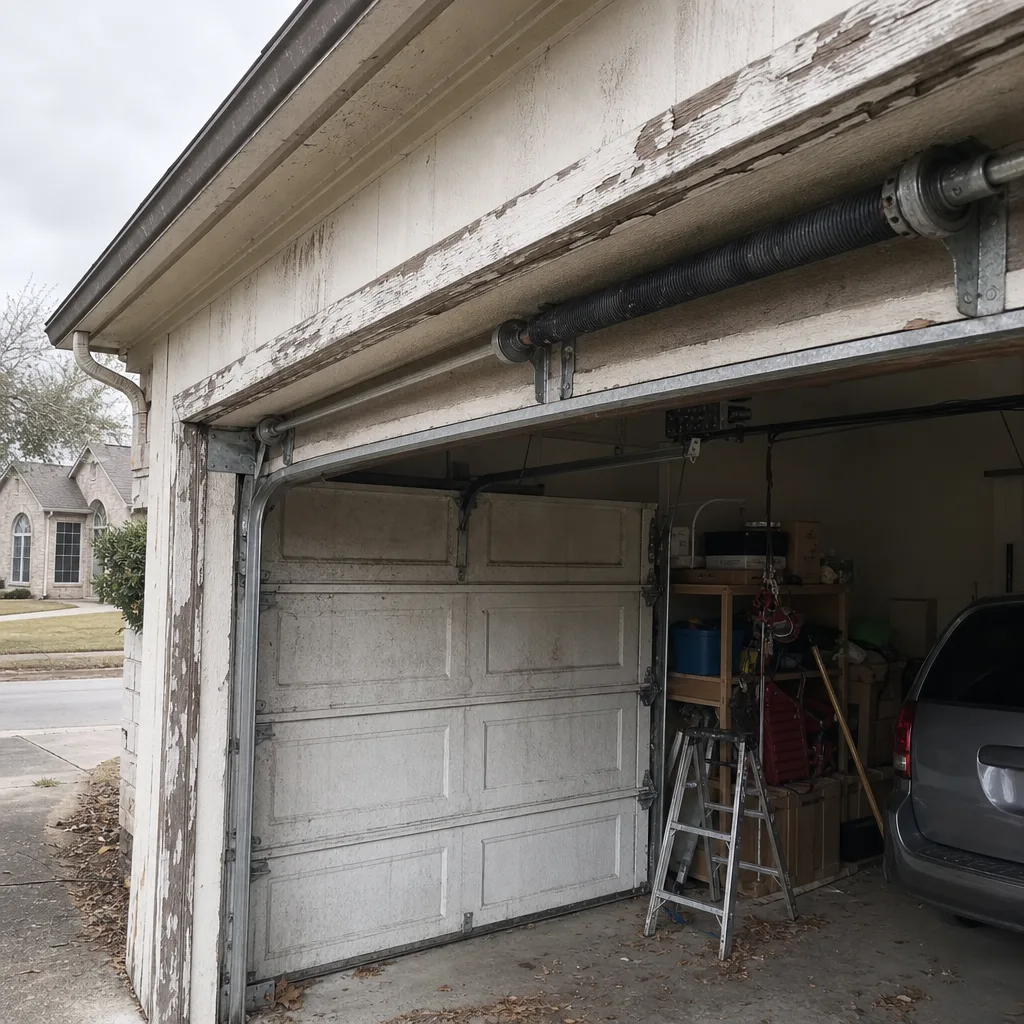 Before
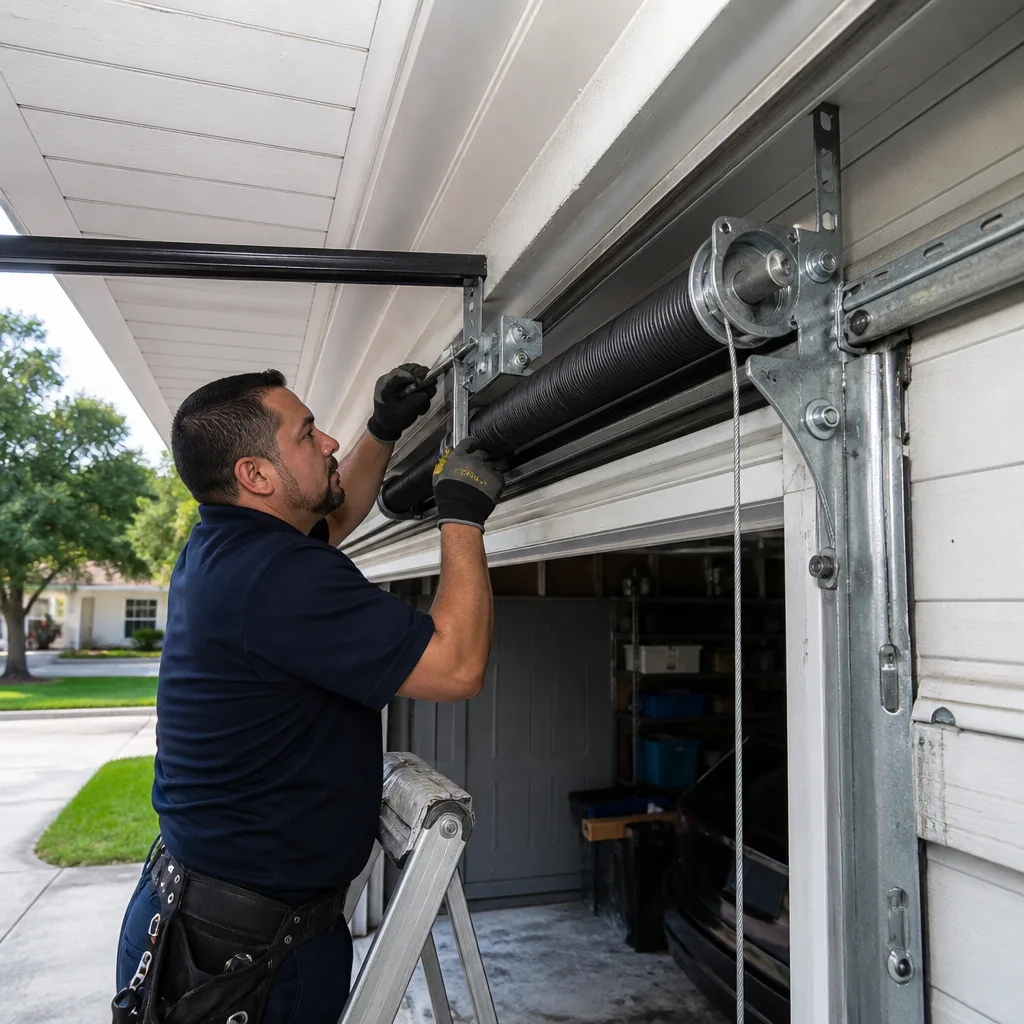 After
After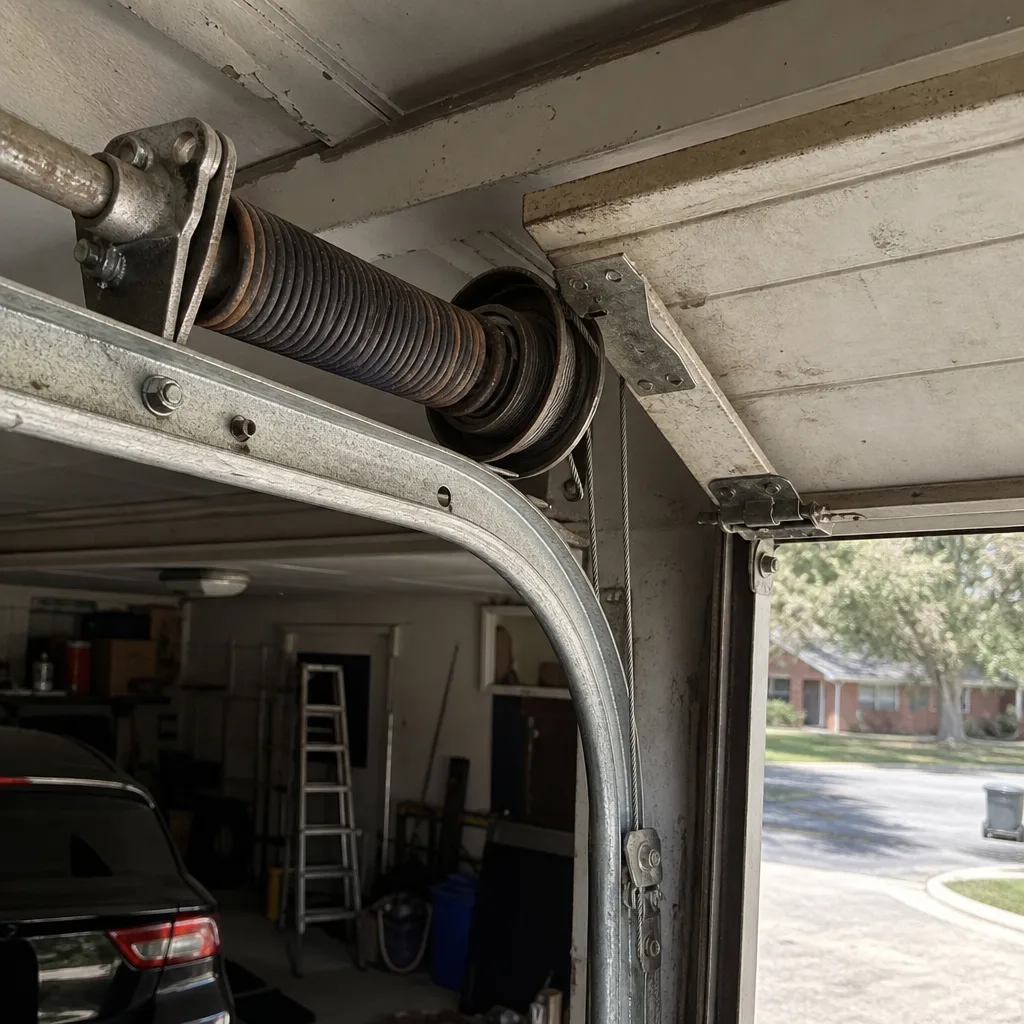 Before
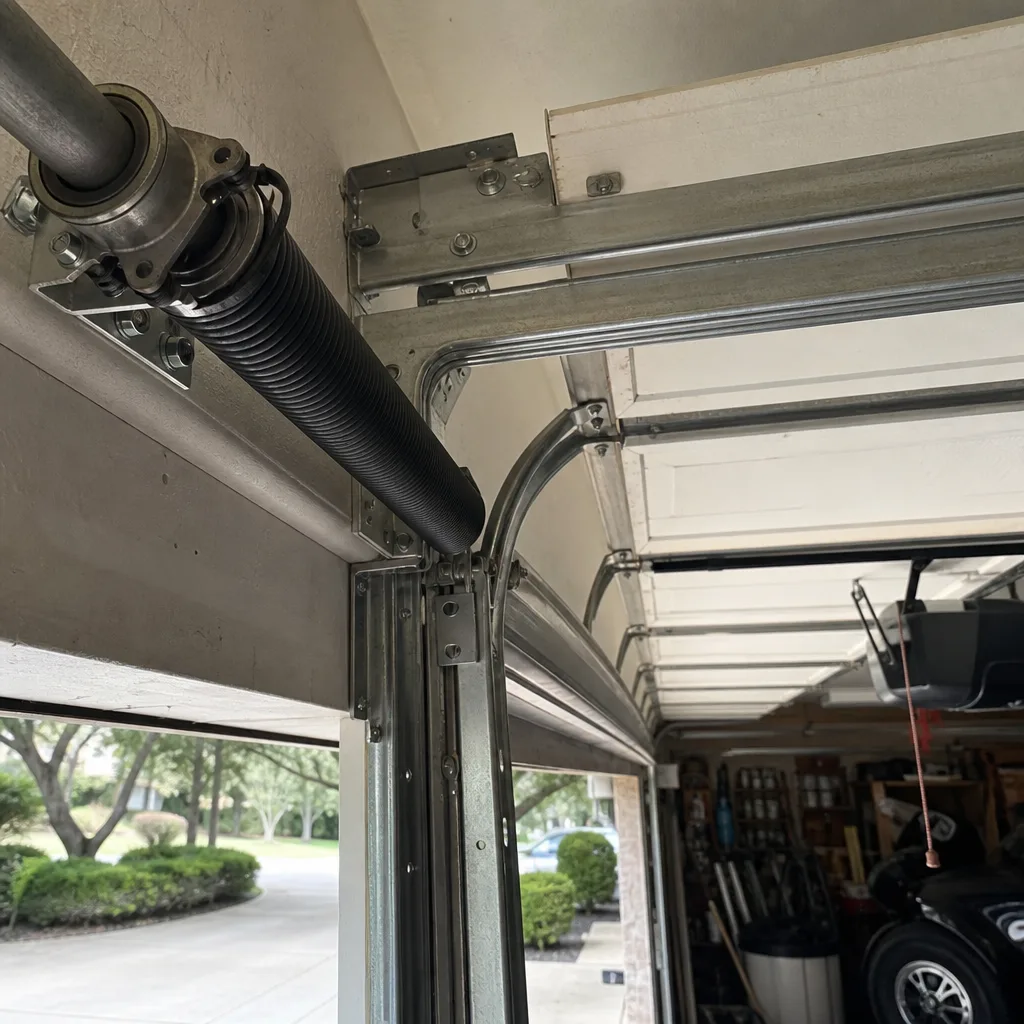 After
After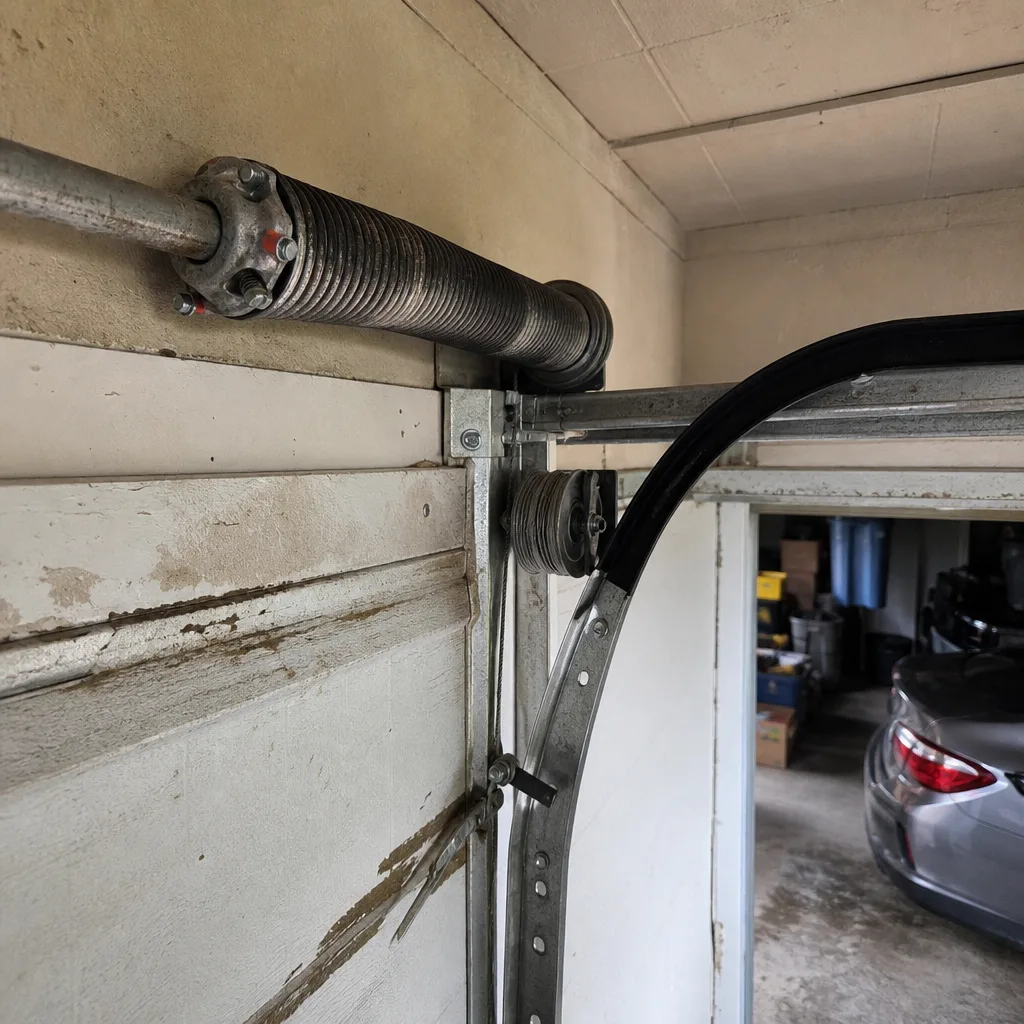 Before
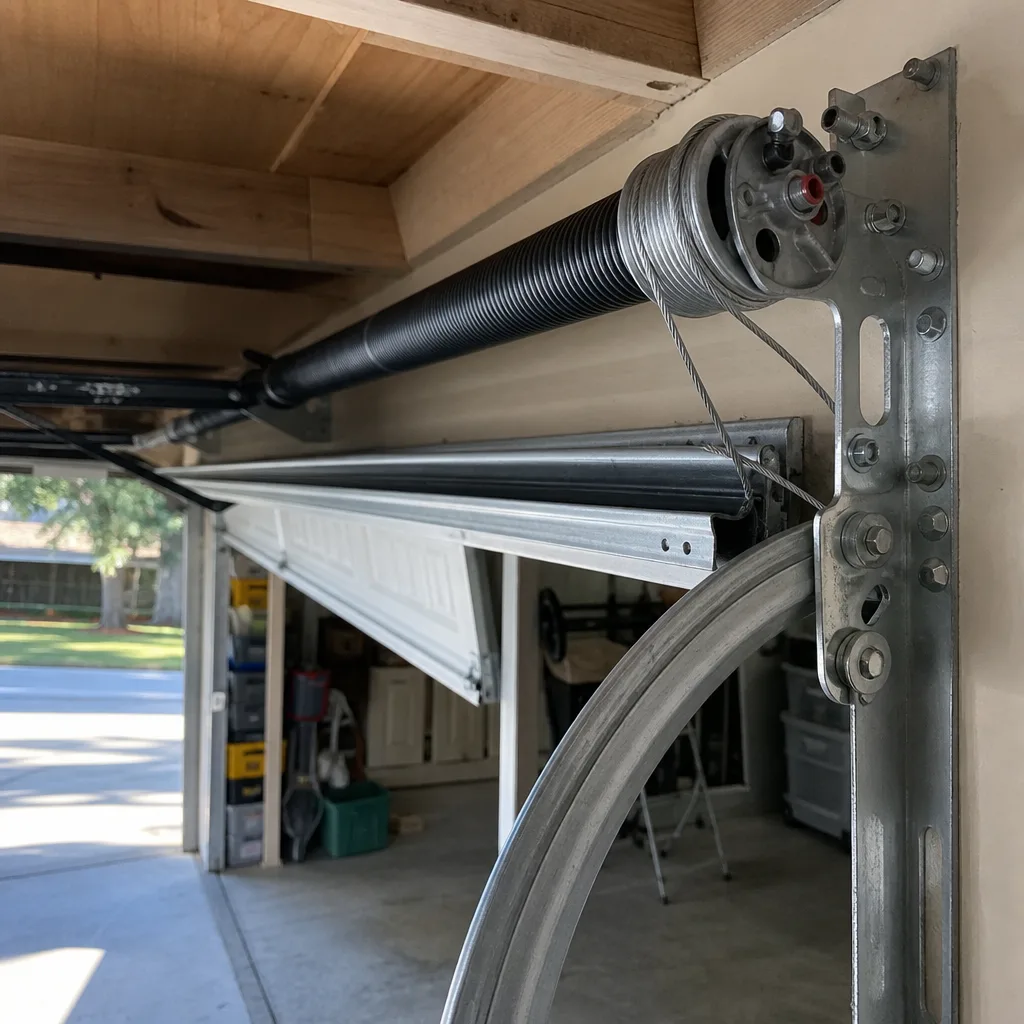 After
AfterThe Complete Guide to Garage Door in Hill Country Village
Hill Country Village sits inside one of the tightest incorporated city limits in Texas, 2.1 square miles of limestone ledges, mature oaks, and driveways that bake in the Hill Country sun. But the microclimates between a shaded lot on Hunters Ridge and a sun-baked driveway on Blossomwood can put two years’ difference in spring life, and most national guides won’t tell you that. This guide will. It’s built on what we have actually seen fail on these streets since 2004, not what a content farm thinks Texas homeowners need. By the time you finish, you’ll know what breaks here, what lasts here, what to pay, and which questions send the wrong contractors running.
Quick Answer
A garage door in Hill Country Village typically lasts 12 to 18 years before major components need attention, but the local combination of limestone dust, cedar pollen, and summer heat cycles shortens spring life to 7 to 10 years. The smartest move for most homeowners is an annual inspection that catches worn springs, corroded bottom panels, and drifting tracks before they become emergency calls. Repair economics here favor replacing springs and rollers on established doors rather than jumping to full replacement, unless the door itself is rusted through or the opener is over 15 years old.
Table of Contents
- How the Hill Country Village Climate Ages Your Door
- Spring Life and Why It Matters More Here
- Materials That Survive Clay Soil and Cedar Pollen
- Opener Noise and Attached Garages
- City vs. County: What Rules Apply
- Costs: What to Expect in This Market
- The One Question to Ask Before You Let Anyone Quote
- Common Mistakes to Avoid
How the Hill Country Village Climate Ages Your Door
Hill Country Village has a climate problem most garage door guides ignore: the city’s dense tree canopy. Those live oaks and cedars that make the streets feel private and established are also dropping pollen, sap, and organic debris on your door every week of the year. Cedar pollen, in particular, is fine enough to work its way into roller bearings and hinge pins. Once it mixes with humidity from a Hill Country rain, it turns into a paste that gums up moving parts and traps moisture against metal. We have pulled bottom panels off doors on Tower Drive and found rust lines following exactly where wet leaf litter had been sitting against the steel.
That moisture trap is the part most guides miss. It’s not the rain itself that kills a door. It’s the debris that holds the rain against the door for weeks. A steel door with a clean bottom edge will handle San Antonio’s wet season without drama. The same door with a season of cedar needles packed into the bottom seal will start blistering paint and corroding the panel from the inside out. The fix is simple and cheap: keep the bottom edge clear, and replace the bottom seal every two to three years. We mention this because it is the single highest-return maintenance habit for Hill Country Village homes, and it takes five minutes with a broom.
The second local factor is heat cycling. A garage door on a west-facing driveway in Hill Country Village can hit surface temperatures above 140 degrees in July, then cool by 60 degrees overnight. That daily expansion and contraction is what fatigues steel panels and ages torsion springs faster than the national average. The shaded lot on Hunters Ridge simply does not put the same stress on hardware as the exposed driveway on Blossomwood. When we give a spring life estimate, we always ask whether the door gets afternoon sun. It changes the answer by years.
Spring Life and Why It Matters More Here
A torsion spring on a garage door has a rated life measured in cycles, and one cycle is one full open and close. Standard builder-grade springs are rated for 10,000 cycles. In a household where the door goes up and down four times a day, that’s roughly seven years. In Hill Country Village, heat accelerates the metallurgical fatigue, so we tell homeowners to expect 7 to 10 years on a standard spring and to start budgeting at year six. A high-cycle spring rated for 20,000 to 30,000 cycles costs more upfront, around 20 to 30 percent more than standard, but it can run 12 to 15 years in this climate. If you plan to be in the house a decade, the math usually favors the upgrade.
We count spring cycles the way you count tire miles, and we’ll tell you what’s left on yours. If you don’t know when your springs were last replaced, and the door is over ten years old, the safest assumption is that you’re on borrowed time. A spring that fails while the door is up drops 200 pounds in a fraction of a second. Nobody needs that surprise at 9 p.m. when the vehicle is sealed inside. The name on the van is the name on the invoice and the name on the license, and I will be there myself when that call comes.
Signs Your Springs Are Near the End
- The door feels heavy when you disconnect the opener and lift it manually. It should stay up on its own mid-track.
- You hear a loud bang from the garage when no one is touching the door. That’s a spring letting go.
- The door opens a few inches and stalls, or one side hangs lower than the other.
- The opener seems to be working harder, or the motor strains on the way up.
- You see a visible gap in one of the torsion springs above the door. That’s a complete failure, and the partial spring cannot be reused.
If any of these are true, the problem is almost never the opener. It’s the spring, and this is not a DIY job. The tension on a wound torsion spring can kill you. Respect it, and call someone who does this every week.
Materials That Survive Clay Soil and Cedar Pollen
Hill Country Village sits on clay-heavy soil that expands when it rains and contracts when it dries. That movement, season after season, pushes concrete aprons and garage slabs out of level. A door threshold that was true last spring can be a half-inch out of plumb by October. When the slab shifts, the door and tracks have to be adjusted to match, or the door starts binding, scraping, and wearing rollers unevenly. This is a problem that national guides simply do not address, because it varies street by street here.
The implication for materials is straightforward. A heavy steel door with a rigid frame will telegraph slab movement as binding and racking faster than a lighter, more forgiving door. We tend to steer Hill Country Village homeowners toward the following based on what we have seen since 2004:
- Steel sandwich doors with polyurethane insulation: the best all-around choice for this climate. The insulation damps heat transfer, and the panel construction tolerates minor frame racking better than single-layer steel. Clopay and Amarr both build versions that hold up well here.
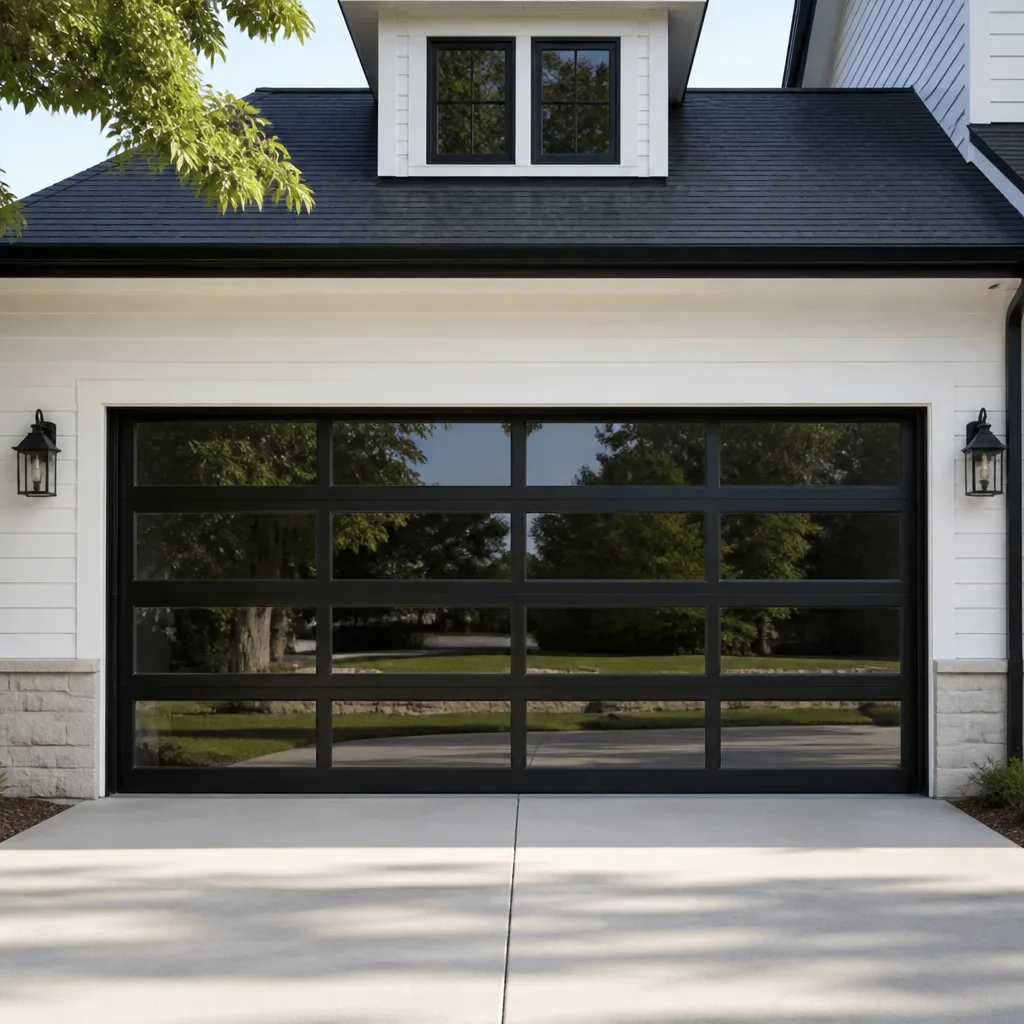
- Aluminum full-view doors: gorgeous and period-appropriate for the mid-century homes here, but the frames show every fraction of slab movement as misalignment. If you choose aluminum, plan on an alignment check every two years.
- Wood doors: beautiful on the right Hill Country Village ranch home, but high-maintenance in this humidity-and-pollen environment. Wood absorbs moisture from the leaf litter we mentioned earlier, and unless you re-seal annually, it will warp and rot at the bottom edge.
- Fiberglass: rare in this market and usually not worth the cost. It handles moisture well but fades under Texas sun faster than most manufacturers admit.
For hardware, we replace stock rollers with sealed-bearing nylon rollers on almost every door we service in Hill Country Village. The sealed bearings keep cedar pollen out of the race, which means the roller spins clean for years instead of grinding itself to a flat spot. The cost difference is modest, and the noise reduction is real.
Opener Noise and Attached Garages
Hill Country Village is a quiet residential city. Lots are large, streets are slow, and the sound environment is closer to a country road than a suburban subdivision. That matters for garage door openers, because the noise a cheap chain-drive opener makes on a $50,000 lot in a dense suburb is a non-issue, but the same opener bolted to the ceiling of an attached garage on a half-acre here will be audible in the master bedroom every time someone leaves early.
We recommend belt-drive openers for attached garages near bedrooms, without exception. A belt-drive LiftMaster or Chamberlain runs at about 50 to 55 decibels, which is roughly the level of a quiet conversation. A chain-drive runs 10 to 15 decibels louder, and in a still Hill Country Village night, that’s the difference between waking a spouse and not. Belt drives also last longer in this climate because they don’t stretch and slap the way chains do when heat cycles loosen the tension. Expect to pay $80 to $150 more for a belt drive over a comparable chain drive, and expect it to be worth every dollar.
Beyond the drive type, look for openers with DC motors and soft-start/soft-stop ramping. The ramping reduces the mechanical jolt at the start of each cycle, which is easier on both the door and the ceiling mount. It also cuts the low-frequency vibration that travels through ceiling joists into the room above. If you have a bedroom over the garage, which is common in the two-story homes on the east side of Hill Country Village, this detail matters more than the decibel rating on the box.
What We Install Most Often Here
- LiftMaster 87504-267: belt drive, built-in camera, ultra-quiet DC motor. The camera is a real feature for Hill Country Village homeowners who want to see the garage from a phone without a separate system.
- Chamberlain B6753T: belt drive, smart-home integration, battery backup. Solid mid-range choice for standard two-car doors.
- Genie 7155-TKV: belt drive, integrated Aladdin Connect. A good budget pick that still gets you off the chain-drive noise problem.
If the opener is straining, the problem is almost never the opener. Before we sell anyone a new unit, we check the door balance first. A properly balanced door lets an opener do its job with a fraction of the effort. An opener that fights an unbalanced door every cycle will fail early, no matter what brand is on the belt cap.
City vs. County: What Rules Apply
Hill Country Village is its own incorporated city, which means it has its own building codes and permit requirements rather than defaulting to unincorporated Bexar County rules. For garage door work, the distinction mostly matters when you’re changing the structure of the opening, not when you’re replacing hardware on an existing door. Here’s the straight breakdown.
If you’re replacing a spring, roller, hinge, cable, panel, or opener on an existing door, no city permit is required. The work falls under routine maintenance, and the city is not involved. This covers about 90 percent of what we do in Hill Country Village.
If you’re replacing the entire door assembly with a door of the same size in the same opening, no city permit is required in most cases. The city treats it as a fixture replacement, not a structural change. However, if you’re widening the opening, changing the header, or converting a carport to a garage, that’s a structural modification, and the city will require a permit with plan review before work starts. We have also seen the city require a re-inspection when a homeowner changes an attached garage to conditioned space or adds living area above the garage.
For anything involving electrical work beyond swapping an opener into an existing outlet, including running a new circuit for a jackshaft opener on the side of the door, Hill Country Village follows the National Electrical Code and expects a licensed electrician’s signature. We coordinate that on jobs where it’s needed, but it’s worth knowing the line exists. The short version: if you’re replacing what’s there, you’re usually clear. If you’re changing what’s there, call the city’s building department first and get it in writing.
Costs: What to Expect in This Market
Garage door pricing in Hill Country Village runs 10 to 20 percent higher than the San Antonio metro average, and there’s a simple reason: the city’s large lots and low density mean a service truck spends more time driving between calls, and the trade-offs here skew toward higher-spec work. Homeowners on these streets are not price-shopping the way suburban tract-home owners do, and they generally want a door that matches the character of the house, which costs more than a white raised-panel builder special.
Here are realistic 2025 price bands for this specific market, based on what we have quoted and billed since 2004:
- Spring replacement (pair): $280 to $440 installed, depending on spring cycle rating and whether we’re converting from extension to torsion.
- Roller replacement (full set): $95 to $140 for sealed-bearing nylon on a standard two-car door.
- Bottom seal replacement: $85 to $120, including the retainer if it’s corroded.
- Opener installation (belt drive, new unit): $450 to $750 installed, depending on opener model and whether we’re adding battery backup or smart features.
- Full door replacement (16×7 steel, insulated, standard panel design): $1,800 to $3,200 installed, with higher-end designs from Clopay or Amarr running $4,000 to $6,500.
- Full door replacement (custom wood or full-view aluminum): $5,000 to $12,000, with the top of that range reflecting custom sizing and finish work.
Every price we quote is agreed before the work starts, and the number does not change between the phone and the driveway. We quote the job on the call, we hold that number when we arrive, and the invoice matches the quote unless you add scope. That’s not a sales tactic. It’s how Otto has done business since 2004, and it’s why we’re still here.
The One Question to Ask Before You Let Anyone Quote
Here’s the question that tells you everything you need to know about a garage door company before they give you a number: Do you carry torsion springs and common opener parts on the truck, or will this be a two-trip job? The answer splits the market cleanly.
The companies that show up with a stocked truck, with springs in 17 different wire sizes and torque settings, with openers and remotes and seals and rollers, are the companies that do garage doors for a living. That’s their whole business. When they diagnose a broken spring, they replace it in the same visit. When they find a bent track, they straighten or swap it on the spot. The companies that show up in a car or a mostly-empty van and quote you a price, then tell you they’ll be back on Thursday with the part, are often sales operations that sub the labor out to a third crew. You’re paying markup, and you’re waiting on a schedule you don’t control.
At Otto’s Garage Door, the answer to that question is: yes, the truck is stocked. We carry springs, cables, rollers, hinges, seals, openers, and the common boards and remotes for LiftMaster, Genie, Craftsman, Wayne Dalton, Raynor, Chamberlain, and the rest. We don’t make two trips for a one-trip job. The person who answered your call is often the person who shows up at the door, and that’s Otto or someone whose check he signs. Ask anyone on your street. We have been in this county since 2004, and Otto is a palindrome: reads the same from either end, same as the door.
Common Mistakes to Avoid
- Lubricating the wrong parts. Spraying lubricant on a torsion spring or the track will not fix a noisy door, and on the track it attracts dust. Lubricate the rollers, hinges, and bearing plates with a lithium or silicone spray, and leave the spring alone.
- Replacing the opener when the spring is the problem. A new opener on a door with dead springs will fail within a year or two. Balance the door first, then decide if the opener is actually bad. In our experience, about half the openers replaced in Hill Country Village could have been saved by fixing the underlying door balance.
- Ignoring a slow-closing or reversing door. If the safety sensors are misaligned or the force settings are wrong, the door may reverse when it should close, or close when it should reverse. Both are safety issues that put people and vehicles at risk.
- Putting off the bottom seal because it looks cosmetic. The bottom seal is the barrier between the inside of your garage and the Hill Country Village leaf litter, cedar pollen, and monsoon rain. A torn seal lets moisture in and accelerates rust on the bottom panel, which is the most expensive panel to replace because it’s the one that takes the structural load.
- Believing a “lifetime warranty” from a company with no local address. A warranty is only as good as the company standing behind it, and a company with no published address and no local phone number will not be around when the spring fails at year eight. We publish our address and license number, and any homeowner can verify both before the truck arrives.
- Waiting until the door fails completely to call someone. A spring showing a visible gap is a loaded weapon. A door that extends a foot and stops is giving you a warning. The cheapest repair is the one made before the full failure, not after.
- Choosing a chain-drive opener for an attached garage in a quiet neighborhood. You will hear it every morning. Spend the extra $100 on a belt drive and keep the peace in your own house.
When to Call a Professional
Call a professional the same day if your torsion spring breaks with the door in the up position, because the cables lose tension and the door can come down hard. Call when the door comes off its track, when a cable is frayed or snapped, when the opener’s force settings need adjustment, or when you hear grinding that’s new. Call before you try any repair that involves the torsion spring, because the energy stored in that spring on a Hill Country Village two-car door is enough to break bones or worse. That’s not anxiety about liability. That’s an honest warning from someone who has repaired the aftermath.
Otto’s Garage Door offers free estimates in Hill Country Village. Call (830) 215-8185, and a live person answers, day or night. The quote you get on the phone is the price you’ll pay, and we’ll tell you before we start if anything changes.
Frequently Asked Questions
Spring replacement on a standard two-car door in Hill Country Village runs $280 to $440 installed, depending on the spring cycle rating and whether we’re converting from extension springs to torsion. High-cycle springs run about 20 to 30 percent more but last 12 to 15 years here. Call (830) 215-8185 for an exact quote, free, with the price held before we touch anything.
No permit is required to replace a garage door with a unit of the same size in the same opening, and no permit is required for spring, roller, or opener replacements. You only need city approval for structural changes like widening the opening or converting a carport. When in doubt, call the city building department first, or ask us and we’ll tell you what we know.
Standard springs last 7 to 10 years in the Hill Country Village heat, and the shaded lots on streets like Hunters Ridge run toward the long end while exposed west-facing driveways run toward the short end. If your springs are over seven years old and the door gets afternoon sun, start planning for replacement now.
Most loud doors in Hill Country Village are noisy because the rollers are worn, the opener is a chain drive, or the door is unbalanced and the opener is fighting it. We replace stock rollers with sealed-bearing nylon and recommend belt drives for attached garages, and the difference is night and day. Call us and we’ll tell you which problem you have before we quote a fix.
No. The price we quote on the phone is the price on the invoice, and we hold that number when we arrive, unless you add work beyond the original scope. We quote upfront, we agree on the work before it starts, and the 90-Day Done Right Promise is written on every invoice.
Yes. We answer calls live, 24/7, and a spring failure that traps your vehicle is exactly the kind of call we prioritize. Call (830) 215-8185, tell us what happened, and you’ll talk to a person who can quote the job on the phone and head your way.
The Bottom Line
A garage door on a Hill Country Village home is not the same machine it would be in Phoenix or Portland. The clay soil moves the slab, the cedar canopy feeds rust, the heat cycles kill springs early, and the quiet streets make opener noise a livability question. The homeowners who get the most out of their doors here are the ones who keep the bottom edge clear, replace springs on a schedule rather than after a failure, choose belt drives for attached garages, and work with someone who stocks the truck and stands behind the work. For more guides & resources, explore our blog. Otto’s Garage Door has been serving this city since 2004, with a published address, a live person on the phone, and the 90-Day Done Right Promise on every invoice. Call (830) 215-8185 for a free estimate, and we’ll answer like the neighbor we are.
Written by Otto Reinhardt, Owner at Otto’s Garage Door, serving Hill Country Village since 2004.