

Last updated September 11, 2026
Full 25-point door and opener safety check with every visit - springs, cables, rollers, tracks, and your LiftMaster or Chamberlain opener included
You get a price before we start. It does not change when the truck arrives.
 Before
 After
After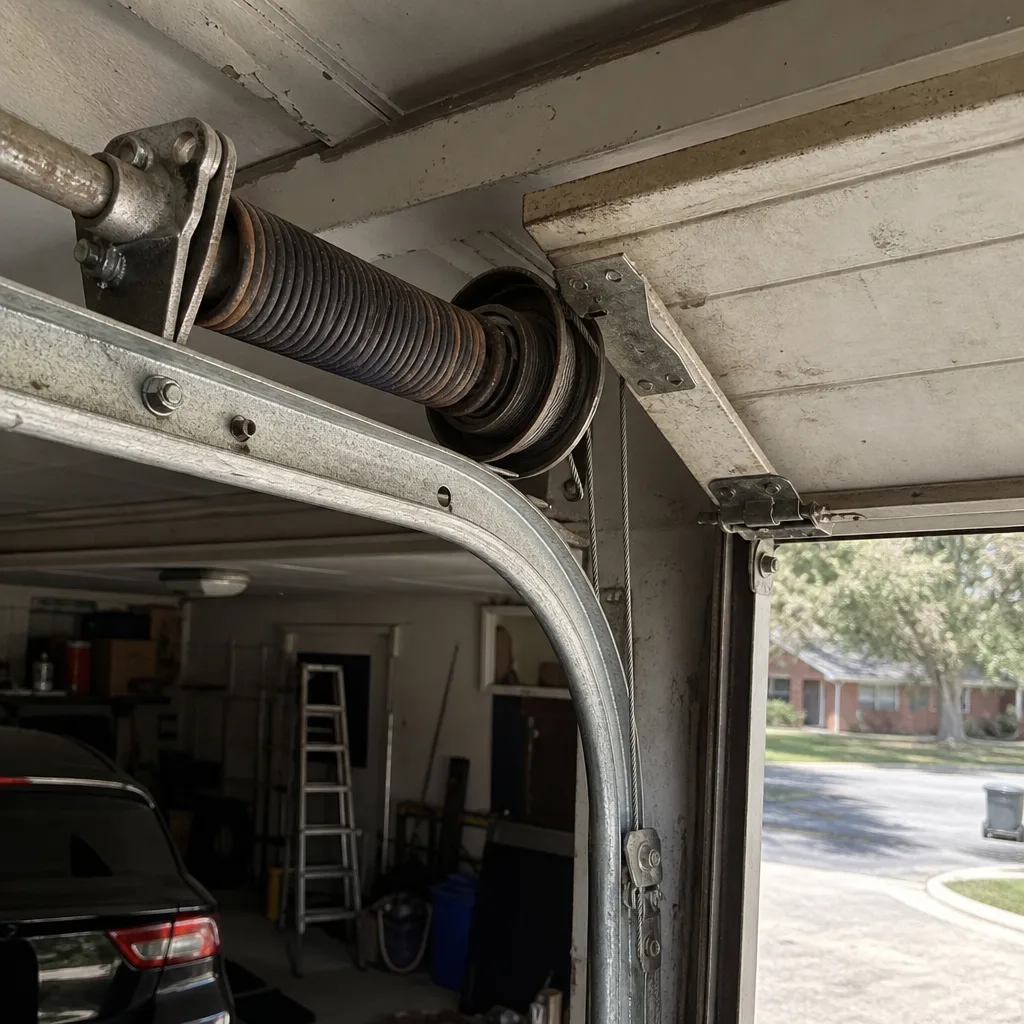 Before
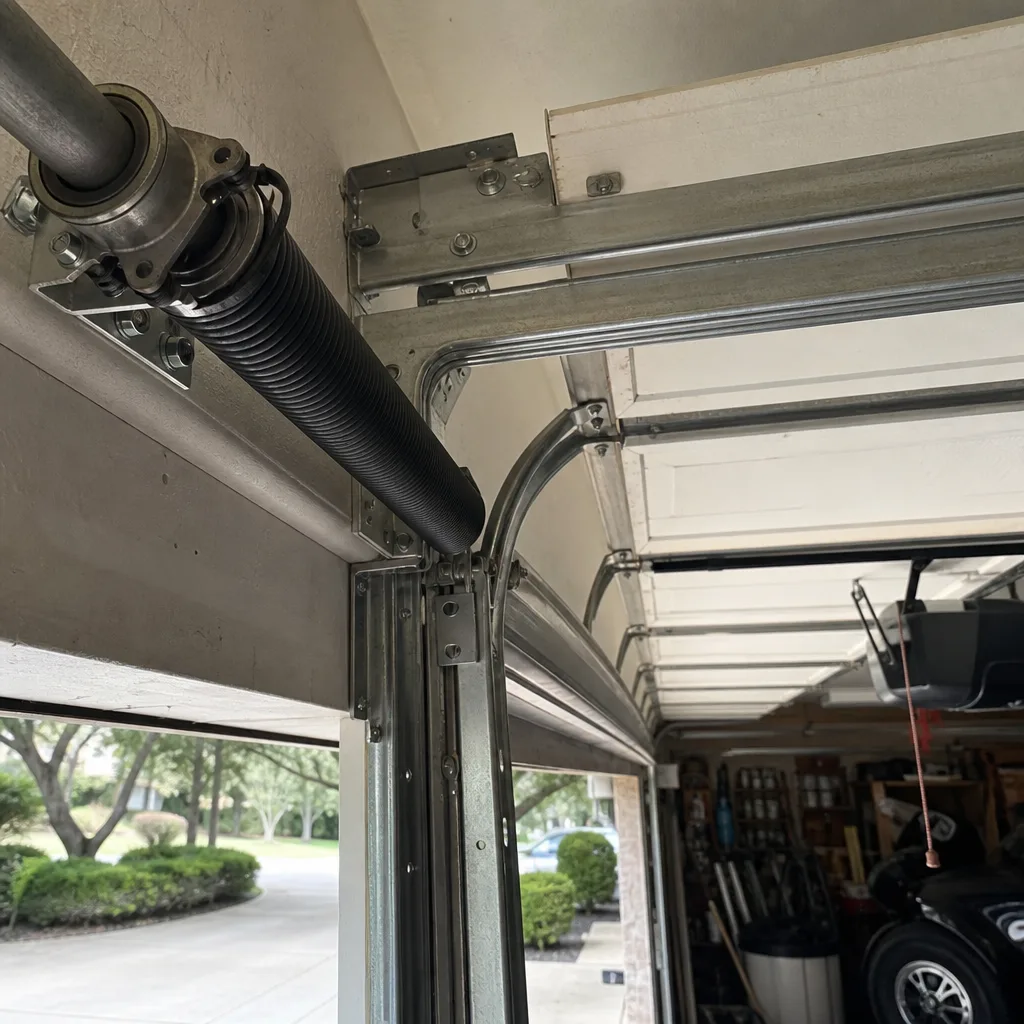 After
After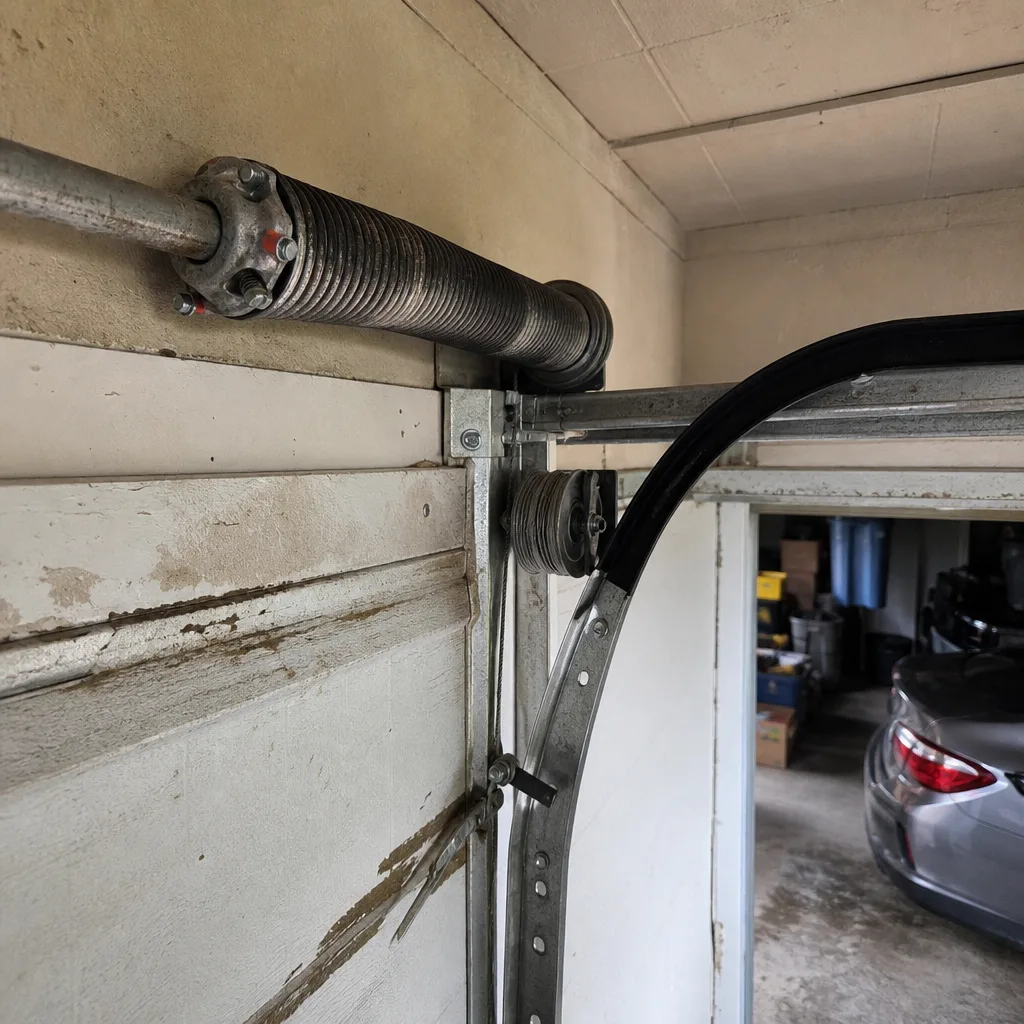 Before
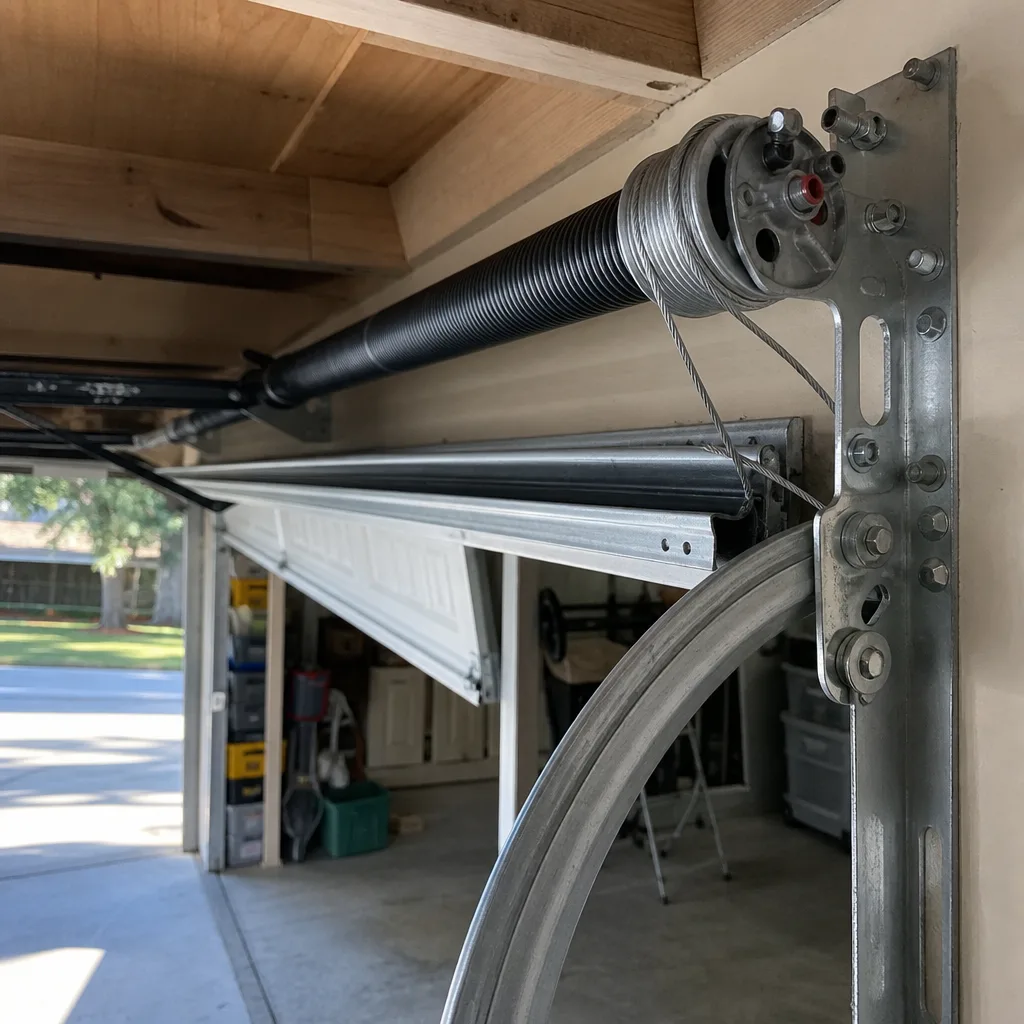 After
AfterHow to Hire a Garage Door Contractor in Hill Country Village: A Step-by-Step Guide
There are over 200 garage door companies listed within 20 miles of Hill Country Village on Google. Fewer than a handful have an actual address inside Bexar County, and almost none will tell you upfront whether the tech who shows up holds a Texas state license or is a day-labor subcontractor riding in a rented van. That gap is where homeowners get burned. This guide walks you through exactly how to vet a garage door contractor in Hill Country Village, step by step, so you’re not finding out on the driveway what you should have known on the phone. For more guides & resources, see our blog.
Quick Answer
Hiring a garage door contractor in Hill Country Village comes down to five things: verify the Texas license and insurance before anyone arrives, get a written quote that breaks down parts and labor, ask who actually shows up and whether they’re an employee or a subcontractor, read the warranty language before you sign, and refuse any deal that’s only good if you decide on the spot. A legitimate local tech will be glad you asked every one of these questions. A fly-by-night outfit will dodge them.
Table of Contents
- Step 1: Verify the Texas License and Insurance in Under Five Minutes
- Step 2: Read a Garage Door Quote Like a Contractor
- Step 3: Ask the Two Questions That Separate “Family Owned” From “Locally Owned”
- Step 4: Know What a Warranty Actually Covers (and What It’s Worth)
- Step 5: Spot Hill Country Village-Specific Red Flags
- Step 6: The 7 Questions to Ask Before You Book
- Step 7: The Final Pre-Hire Checklist
Step 1: Verify the Texas License and Insurance in Under Five Minutes
Before anyone sets foot on your driveway in Hill Country Village, you should know three things about them: whether they hold a valid contractor registration, whether their insurance is current, and whether the person who shows up is actually authorized to work under that registration. Texas does not have a single statewide garage door contractor license, which confuses a lot of homeowners. What Texas does have is a Department of Licensing and Regulation (TDLR) registration for businesses that work on automatic garage doors and openers, plus local municipal requirements that vary by city.
Here’s what you can check in under five minutes, from your phone, before the truck arrives:
- Verify TDLR registration. Go to the TDLR license search portal and enter the company name. Any legitimate garage door company working on automated openers in Texas should have an active TDLR registration. If the name on the quote doesn’t match the name on the TDLR record, ask why before you sign anything.
- Request a certificate of insurance, not a verbal “we’re insured.” A real certificate lists the policy number, the coverage dates, and the name of the insured entity. If the insured name doesn’t match the name on the invoice, you’re dealing with a subcontractor situation, and you need to know that before you’re holding the bag on a liability claim.
- Check the Bexar County Appraisal District or city records for a physical address. This is the one almost nobody does. If a company lists a P.O. box or an address that traces back to a UPS store, that’s a signal. It doesn’t automatically mean they’re dishonest, but it does mean you can’t find them if the warranty turns out to be paper.
We’ve been at this in Hill Country Village since 2004, and our license number and physical address are published on our site because Otto Reinhardt doesn’t hide behind a P.O. box. The name on the van is the name on the license. That’s the standard you should hold every bidder to.
If you’re looking for someone we’d recommend you call before you even start this process, our Otto’s Garage Door home page has the license number, the address, and the phone number answered by a live person 24/7. But even if you don’t call us, run these three checks on whoever you do call.
Step 2: Read a Garage Door Quote Like a Contractor
Most homeowners read a garage door quote the way they read a restaurant menu, looking at the total at the bottom and not much else. If you want a deeper look at the full picture, see our Complete Guide to Garage Door in Hill Country Village. A contractor reads the line items, because that’s where the padding hides and where the lowball reveals itself. Here’s what a clean quote for garage door work in Hill Country Village should look like, and what the red flags tell you.
Line items that signal padding:
- “Trip fee” or “dispatch fee” listed separately from labor. If a company charges you to show up and then quotes you the job, that’s a fee for the privilege of being quoted. A local company doesn’t charge a trip charge inside its own county. If you see this line, cross it out or cross the company off.
- Vague “miscellaneous hardware” charges over $50. Hardware has names: brackets, rollers, track, hinges, struts. If the quote doesn’t tell you what parts are going on your door, the tech is planning to decide when he gets there, and that decision usually costs you money.
- A second labor line that says “adjustment” or “calibration.” Installing a door is one labor event. Adjusting it is part of the install. If you see these split into separate charges, you’re being billed twice for the same set of hands.
Line items that signal a lowball waiting to become an upsell:
- No rollers on the quote. Any door being repaired or replaced should have its rollers inspected and usually replaced. A quote that omits rollers is a quote that’s low by design, with the “discovery” coming after the door is already off the track.
- No mention of spring cycle rating. A spring’s lifespan is measured in cycles, not years. A door that opens four times a day needs springs rated for at least 10,000 cycles. If the quote just says “springs,” you’re about to get the cheapest spring on the market, and you’ll be replacing it in three years instead of ten.
- No balance test or safety reverse test listed. These are the two things that keep a 200-pound door from coming down on someone. If the quote doesn’t include them, the quote isn’t complete.
What a clean quote actually looks like: every part named, every line item priced, the spring cycle rating printed, the balance and safety tests listed, the warranty terms written out, and a single total that matches the number you were told on the phone. We quote jobs on the phone and hold that number when we get to your driveway in Hill Country Village, because a door is 200 pounds riding on two springs. Respect it, and respect the person paying for it.
Step 3: Ask the Two Questions That Separate “Family Owned” From “Locally Owned”
Every garage door website in Texas says “family owned” or “locally owned” or both. Most of them are neither, in any way that matters to you. “Family owned” can mean a franchise operated by someone who lives in Houston and runs fifteen locations across three counties. “Locally owned” can mean a licensed entity registered to a holding company in Delaware. Neither phrase, by itself, tells you whether the person who shows up at your house in Hill Country Village has any stake in your door after the check clears.
Two questions reveal which one you’re actually dealing with:
Question 1: “What’s your physical address, and is it the same address as your license?”
A franchise operator will give you a corporate address or a training facility address. An owner-operator will give you an address that matches the license record, and they won’t blink when you ask. Otto Reinhardt has published his address since 2004, and he will tell you to drive by if you want. That’s what actual local looks like.
Question 2: “If I have a problem with this door in six months, who am I calling, and will it be the same person who installed it?”
A franchise will transfer you to a call center that opens a ticket. The tech who installed your door may not even work there anymore. An owner-operator will say “call me,” and means it. The 90-Day Done Right Promise from Otto’s Garage Door is written on every invoice, and if it’s not done right, one call brings Otto back, no runaround. That’s a handshake that happens to be in writing.
Here’s the thing about Hill Country Village: it’s small. A bad contractor doesn’t just take your money. They’re going to be at the same Whataburger on 1604 that you are, at the same H-E-B, at the same school pickup line. That’s the real difference between a company that has a local address and one that has a local marketing budget. One of them has to look you in the eye on Saturday. The other one changes its phone number.
Ask anyone on your street. We’ve been in this county since 2004, and Otto is a palindrome: reads the same from either end, same as the door.
For more on what a proper repair looks like when it’s done right, see Garage Door Repair in Hill Country Village.
Step 4: Know What a Warranty Actually Covers (and What It’s Worth)
A warranty is only as good as the company standing behind it. A warranty card from a fly-by-night operation is worth exactly the paper it’s printed on, because in twelve months, the phone number on that card will ring into a disconnected line and the company will have re-registered under a new name. Here’s how to tell whether a warranty actually means something.
Parts warranty versus labor warranty. Almost every garage door component comes with a manufacturer warranty on the part itself. A Raynor door, a LiftMaster opener, a Genie rail system, they all carry manufacturer coverage. What varies wildly is the labor warranty, which is what you pay for when something fails and someone has to come out and fix it. A legitimate labor warranty is at least 90 days. A warranty that’s “parts only” and expires in 30 days is a signal that the installer doesn’t trust their own work.
What a legitimate warranty covers:
- Parts and labor for a stated period, in writing, with the company name and phone number printed on it.
- Springs rated for a specific cycle count, with that number written on the invoice. A spring warranty that doesn’t state the cycle rating is a warranty on a part nobody identified.
- A named contact. Not a department. A person. When something goes wrong, you call a person who knows your name and your door.
What a worthless warranty looks like:
- No labor coverage, or labor coverage that “expires” in 14 to 30 days.
- An unlisted phone number or a company name that doesn’t match any TDLR registration.
- Warranty claims routed through a third-party administrator who is “not responding to requests.”
The 90-Day Done Right Promise from Otto’s Garage Door is ninety days in writing, parts and labor, on every single job. If it’s not done right, we make it right. Not a call center. Not a ticket. Otto himself. That’s the standard, and that’s what a warranty should sound like when the person who signed it lives twenty minutes away.
If you’re considering a new door rather than a repair, the warranty conversation is even more important, because a door installation has more moving parts and a longer expected life. Read more at Garage Door Installation in Hill Country Village.
Step 5: Spot Hill Country Village-Specific Red Flags
Every market has its scams, but Hill Country Village has a particular profile: affluent homes, gated streets, and homeowners who often aren’t home when the work gets quoted. That combination attracts a specific kind of operator. Here are the red flags we hear about from neighbors, the ones specific to this area.
- Out-of-area trucks. If the van has a Denton or El Paso wrap and they’re working 20 miles outside their service area, you’re a stop on a route, not a neighbor. Route-based companies don’t return for warranty calls because the route has moved on.
- No physical address on the invoice. A P.O. box, no address at all, or an address that traces to a strip mall suite that’s for rent. This is the single most reliable predictor of a warranty that won’t be honored, and it shows up on invoices in Hill Country Village constantly.
- Pressure to decide before the tech leaves your driveway. “This price is only good today” means “I don’t want you to call the second bidder.” A real contractor wants you to get a second bid, because a real contractor knows they’ll win on merit. We offer a Free Second Opinion on any written estimate, no trip charge inside the county, because we want you to compare. Pressure tactics exist to prevent comparison.
- The “we were in your neighborhood” cold knock. Legitimate garage door companies in Bexar County do not go door to door. The cold knock is the lead generation method of a crew that has no reputation and no repeat customers.
- Cash-only or “discount for cash today.” If there’s no paper trail, there’s no warranty and no recourse when the door fails in six weeks. A real job has a real invoice.
If you see any of these, walk away. Even if the price is low. Especially if the price is low. The cheapest bid in Hill Country Village is usually the one that costs the most by the time the second company has to come fix the first company’s work.
For a deeper look at what repair and replacement actually cost in this market, see Garage Door Opener in Hill Country Village.
Step 6: The 7 Questions to Ask Before You Book
Here are the seven questions, in order, that we would want asked of us by a homeowner in Hill Country Village. These are the questions that separate the legitimate tech from the dodge artist, and a good tech will answer all seven without pausing.
- “Are you registered with TDLR, and can I see the number?” A good answer is a number you can verify on the state portal. A dodge is “we’re fully licensed” or “we don’t need that for garage doors.”
- “Who is showing up, and are they your employee or a subcontractor?” A good answer is a name and a relationship. Our crew is background-checked, uniformed, and trained across LiftMaster, Chamberlain, Genie, Clopay, Amarr, Wayne Dalton, Craftsman, and Raynor. A dodge is “our techs are all qualified” with no names.
- “What’s the spring cycle rating on the spring you’re quoting?” A good answer is a number, usually 10,000 cycles or higher. A dodge is “it’s a standard spring” or “they’re all about the same.”
- “Does the labor warranty cover the full job, and for how long?” A good answer is 90 days or more, in writing. A dodge is “parts carry a manufacturer warranty” and nothing about labor.
- “Will the price change once you see the door?” A good answer is “no, unless you want additional work and approve it in writing before we do it.” A dodge is “depends on what we find.”
- “Do you carry the common parts on the truck?” A good answer is yes, springs and rollers and hinges are on the truck. A dodge is “we’ll have to order that.” A company that has to order basic parts is a company that doesn’t do this work often.
- “If I call at 9 p.m. on a Sunday with a door that won’t close, who answers?” A good answer is “a person.” Our phones are answered live, 24/7, and it’s often Otto himself. A dodge is “our office hours are Monday through Friday.” A door that won’t close at 9 p.m. is a security hole in your house, and the company that tells you to wait until Monday is telling you something about their priorities.
A door is 200 pounds riding on two springs. Respect it. And respect yourself enough to ask all seven questions before you let anyone touch it.
Step 7: The Final Pre-Hire Checklist
You’ve done the homework. You’ve called around. You’ve got quotes in hand. Before you sign anything or hand over a deposit, run through this final checklist. Every item should be a yes.
- TDLR registration verified against the TDLR portal, name matches invoice. Yes or no. If no, stop.
- Certificate of insurance provided, policy current, insured name matches invoice. Yes or no. If no, stop.
- Physical address in Bexar County listed on the invoice and traceable to a real building. Yes or no. If no, stop.
- Written quote with named parts, line-item pricing, and a total that matches the phone quote. Yes or no. If no, stop.
- Labor warranty of at least 90 days, written, with the owner’s name on it. Yes or no. If no, stop.
- Spring cycle rating stated in writing. Yes or no. If no, stop.
- No pressure to decide today, no cash discount, no cold-knock origin. Yes or no. If no, stop.
If every line is a yes, you’re dealing with a legitimate contractor. If any line is a no, you’re not, and it doesn’t matter how good the price looks. We built this checklist to hold ourselves to, and we pass it every time. We’d rather you check us than trust us, because trust is earned by being checkable.
Common Mistakes to Avoid
- Hiring the first company that answers the phone during a panic. A broken spring at 7 a.m. with your car trapped inside feels like an emergency, and it is, but the first company that answers is not necessarily the best company. Call two. A legitimate company will hold a quote while you compare.
- Accepting a verbal quote. If it’s not written down, it doesn’t exist. A verbal quote is a blank check the tech fills in when the work is done, and you’ll pay whatever he writes.
- Skipping the TDLR check because “it’s just a garage door.” An automated opener is an electrical device attached to a 200-pound moving object. The state registers companies for a reason. The five-minute check is the cheapest insurance you’ll ever buy.
- Focusing on the door brand instead of the installer. A Raynor door installed badly will fail faster than a builder-grade door installed right. The brand gets forty percent of the credit. The installer gets sixty.
- Not asking about the spring cycle rating. The spring is the part that fails first, and the difference between a 5,000-cycle spring and a 15,000-cycle spring is years of service life. If the quote doesn’t say, the quote is hiding something.
- Paying in full before the work is done and tested. A deposit is normal. Full payment before the door balances and the safety reverse test passes is not. Make sure you see the door run through its full cycle before you hand over the final check.
- Assuming “licensed and insured” on a website means anything without verification. Anyone can type those words. The verification is the TDLR portal and the certificate of insurance. Those are facts. The website copy is marketing.
When to Call a Professional
Some garage door issues are DIY-friendly. A loose hinge screw, a photo-eye realignment, a remote that needs new batteries, those you can handle. But the moment the problem involves a spring under tension, a cable that’s frayed or off the drum, or a track that’s pulled away from the wall, you’re dealing with stored kinetic energy that can kill or maim. A garage door spring releases enough force to break bones and worse if it lets go while you’re working on it. Do not “just watch a YouTube video.” The video doesn’t show the people who ended up in the emergency room.
If the door is off balance, if it won’t stay in place when you release the opener, if you hear grinding or see the cable fraying, if the opener is straining (and the problem is almost never the opener), call someone who does this every day. Otto’s Garage Door offers free estimates in Hill Country Village. Call (830) 215-8185, and a live person will answer, quote the job on the call, and hold that price when we get there.
Frequently Asked Questions
A typical garage door repair in Hill Country Village runs from $120 for minor adjustments to $180 to $340 for spring replacement, and $450 to $900 for a full panel or track repair. The price depends on the door type, the spring cycle rating, and whether the parts are carried on the truck or special-ordered. Call (830) 215-8185 for an exact quote, estimates are free, and the price we quote on the phone is the price on the invoice.
Yes, for repair and emergency calls, and we answer the phone 24/7, including nine at night when a spring lets go and your vehicle is sealed inside. Otto quotes the job on that call and holds the number when he gets there. For new installations and full door replacements, the work is measured and ordered, so expect a free measure and a written price rather than same-day completion.
No, not with us, and not with any legitimate contractor. The price quoted on the phone or in writing is the price on the invoice, unless you approve additional work in writing first. If a company tells you the price will “depend on what we find,” that’s a company planning to find things. We’ve quoted jobs in Hill Country Village over the phone for twenty years and the number holds when the truck arrives.
Ask for the physical address and check it against TDLR records and the Bexar County Appraisal District. If the address is a P.O. box, a rented suite, or traces to another county, the company is not local in any way that helps you. Otto’s Garage Door has published a Bexar County address and license number since 2004, and you’re welcome to verify both before the truck arrives.
A capable tech works across LiftMaster, Chamberlain, Genie, Clopay, Amarr, Wayne Dalton, Craftsman, and Raynor, because the brand is less important than the installation. A company that only services one brand is a company that sells one brand, not a company that fixes doors. The question isn’t what brand they carry, it’s what they know how to service.
For most repairs and replacements on an existing door, no permit is required in Hill Country Village. For new construction, or when the garage opening itself is being modified, the city may require a permit, and your contractor should tell you that before work starts rather than discovering it mid-job. A company that handles this conversation upfront is a company that has done this work locally.
Ninety days or more, covering both parts and labor, in writing, with the owner’s name on the document. Anything less than that, or a warranty that covers “parts only” from the manufacturer, is not a labor warranty at all. The 90-Day Done Right Promise from Otto’s Garage Door is written on every invoice, and if it’s not done right, one call brings Otto back.
No. A torsion spring holds enough energy to break bones, sever fingers, or kill if it releases while you’re working on it. The tools and technique are specialized, and the margin between a successful job and a trip to the emergency room is measured in inches. A door is 200 pounds riding on two springs. Respect it enough to call someone who replaces springs every week.
The Bottom Line
Hiring a garage door contractor in Hill Country Village is not about finding the cheapest bid. It’s about finding the one name you can verify, the one face you’ll see again at the hardware store, and the one written guarantee from someone with skin in the game. Check the TDLR registration, demand a written quote with named parts and a cycle rating, ask who shows up and whether they’re an employee, read the warranty before you sign, and walk away from any pressure to decide on the spot. For year-round maintenance tips, see our Seasonal Garage Door Care for Hill Country Village: Year-Round Homeowner’s Guide. The questions that protect you are the same ones a legitimate local tech will be glad you asked. Otto Reinhardt has been asking himself those questions on your behalf since 2004.
Written by Otto Reinhardt, Owner at Otto’s Garage Door, serving Hill Country Village since 2004.